
What Is a Coco Peat Block 5 Kgs?
Table of Contents
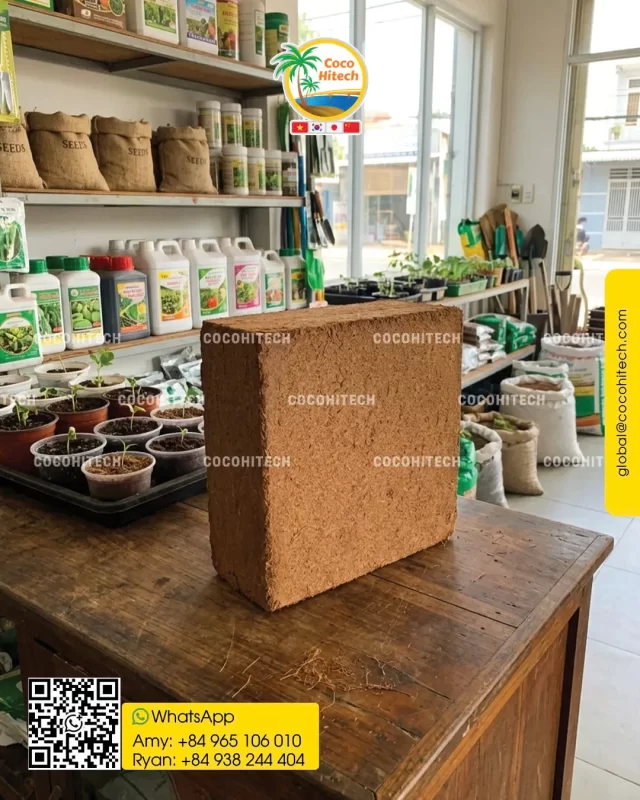
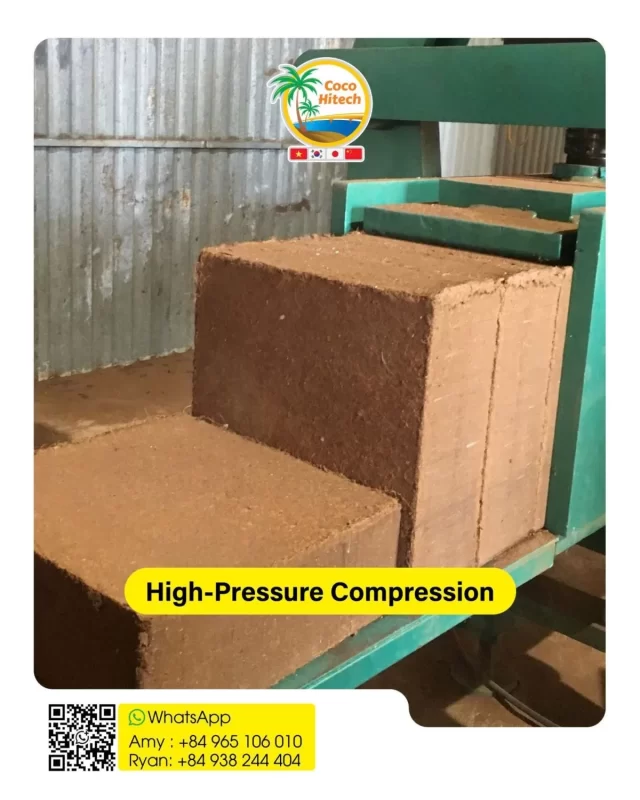
A Coco Peat Block 5 Kgs is a compressed growing medium manufactured from the fine particles collected during coconut husk processing. After being processed, dried, screened, and compressed, the coco peat is formed into a compact block weighing approximately 5 kilograms.
Once water is added, the compressed block expands and produces a loose, lightweight growing medium. Depending on moisture content, compression ratio, and production specifications, one 5 kg coco peat block can generally expand to approximately 70–75 liters.
Because of its compact size and high expansion capacity, the Coco Peat Block 5 Kgs is widely used in horticulture, commercial nurseries, greenhouse cultivation, potting soil production, seedling propagation, and modern agricultural systems.
Why Choose Coco Peat as a Growing Medium?
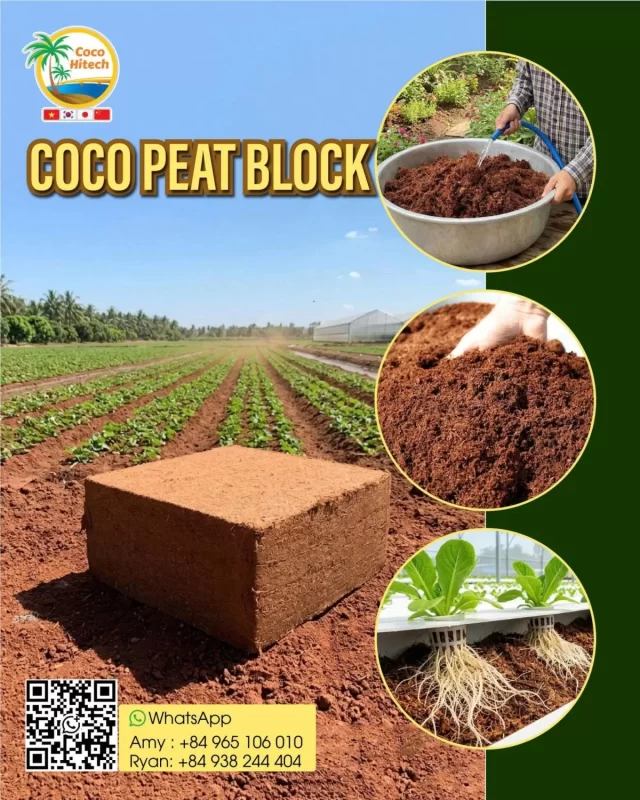
Coco peat is valued for its ability to retain moisture while maintaining sufficient air space around plant roots. This balance is important because healthy roots require both water and oxygen.
Unlike heavy garden soil, coco peat has a lightweight and porous structure. It can help improve water distribution, root development, and growing-medium consistency when used correctly.
Excellent Water-Holding Capacity
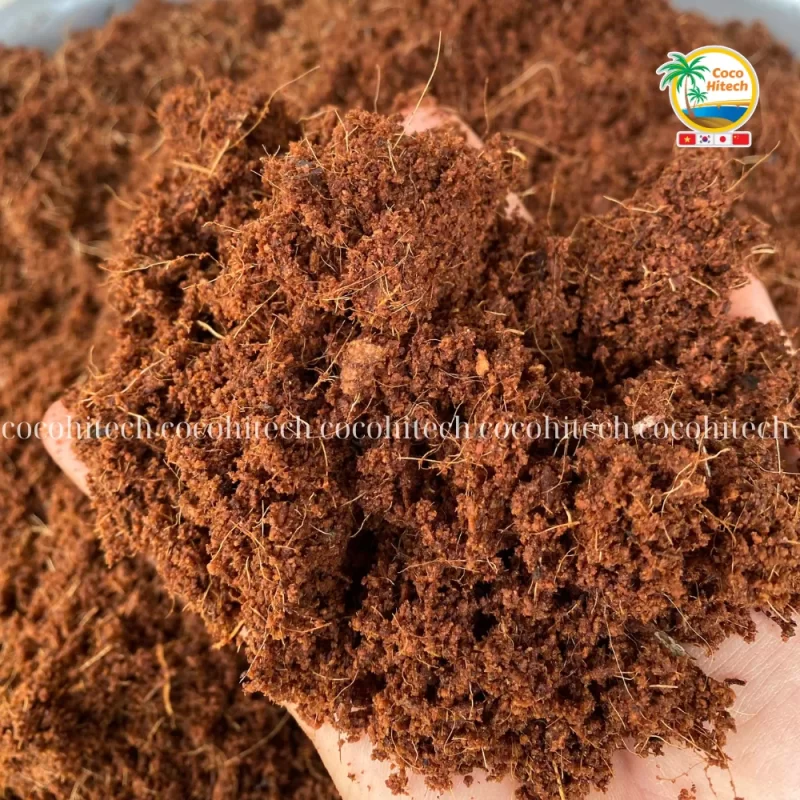
Coco peat can absorb and retain a considerable amount of water. This helps the growing medium remain moist for longer periods and may reduce the frequency of irrigation.
Its water-retention properties make it suitable for:
- Seed germination
- Seedling production
- Greenhouse cultivation
- Potting mixes
- Flower and vegetable production
- Nursery plants
The actual watering schedule should still be adjusted according to the crop, climate, container size, drainage conditions, and mixing ratio.
Good Air Porosity
Although coco peat retains moisture, its natural structure also supports air movement within the root zone.
Proper aeration helps roots access oxygen and may reduce problems associated with dense or compacted soil. For crops that require higher drainage, coco peat can be blended with materials such as coco chips, perlite, bark, or other coarse growing-media components.
Lightweight and Easy to Handle
A compressed coco peat block occupies significantly less storage space than loose growing media. This makes it practical for international shipping, warehouse storage, distribution, and farm handling.
The blocks can be transported to the growing site and expanded only when needed, helping users manage storage space more efficiently.
Sustainable Coconut-Based Material
Coco peat is produced from coconut husk, a renewable agricultural material. Using coconut coir products helps transform coconut-processing by-products into useful materials for agriculture and horticulture.
For farms, nurseries, and growing-media manufacturers looking for alternatives to conventional substrates, the Coco Peat Block 5 Kgs offers a practical coconut-based solution.
Coco Peat Block 5 Kgs Specifications
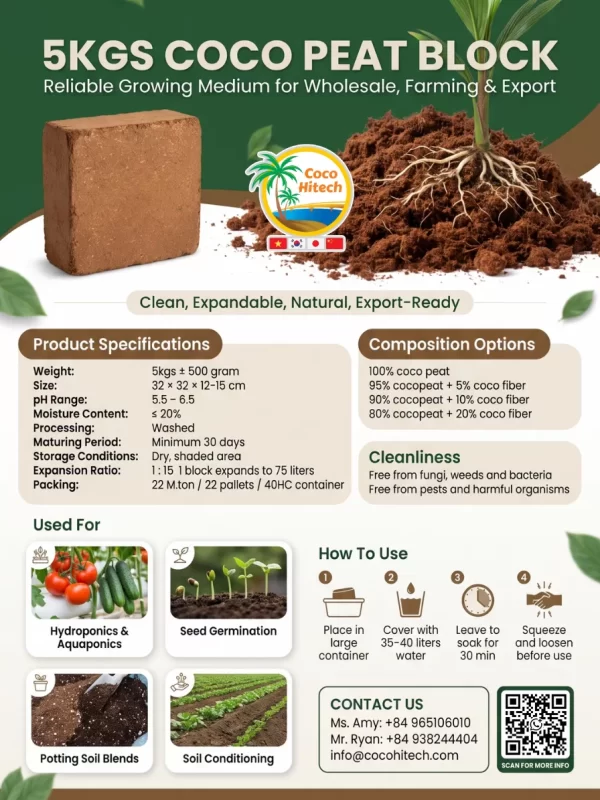
Typical specifications may include:
| Specification | Typical Information |
|---|---|
| Product name | Coco Peat Block 5 Kgs |
| Raw material | coco peat |
| Block weight | 5 kg |
| Expanded volume | Approximately 70–75 liters |
| pH | Approximately 5.5–6.5 |
| Available type | Washed or unwashed |
| EC option | Low EC or high EC, depending on requirements |
| Packaging | Individual block or palletized loading |
| Origin | Vietnam |
| Main applications | Horticulture, nurseries, greenhouses, potting mixes and agriculture |
Specifications can be customized according to the buyer’s crop, market, packaging requirements, and intended application.
Low EC and High EC Coco Peat Blocks
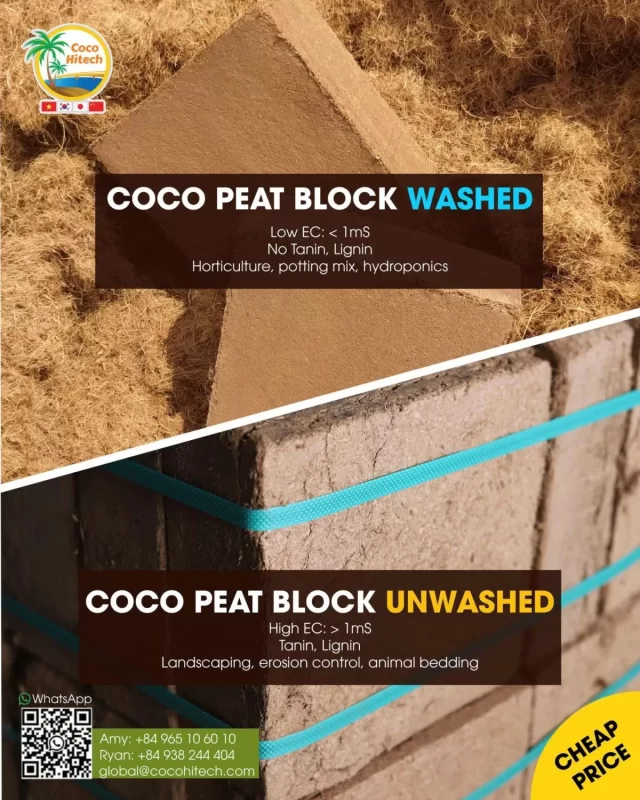
Electrical conductivity, commonly called EC, indicates the concentration of soluble salts in the growing medium.
Choosing the appropriate EC level is important because different crops and agricultural applications have different salt-tolerance requirements.
Low EC Coco Peat Block
A washed Low EC coco peat block is processed to reduce naturally occurring soluble salts. It is generally preferred for:
- Seedling production
- Sensitive crops
- Greenhouse vegetables
- Floriculture
- Professional growing-media blends
- Soilless cultivation
A typical washed Low EC specification may be EC ≤ 0.5 mS/cm, measured according to the agreed testing method, such as the 1:5 volume extraction method.
Buyers should always confirm both the EC value and testing method because results may vary depending on how the sample is prepared and measured.
High EC Coco Peat Block
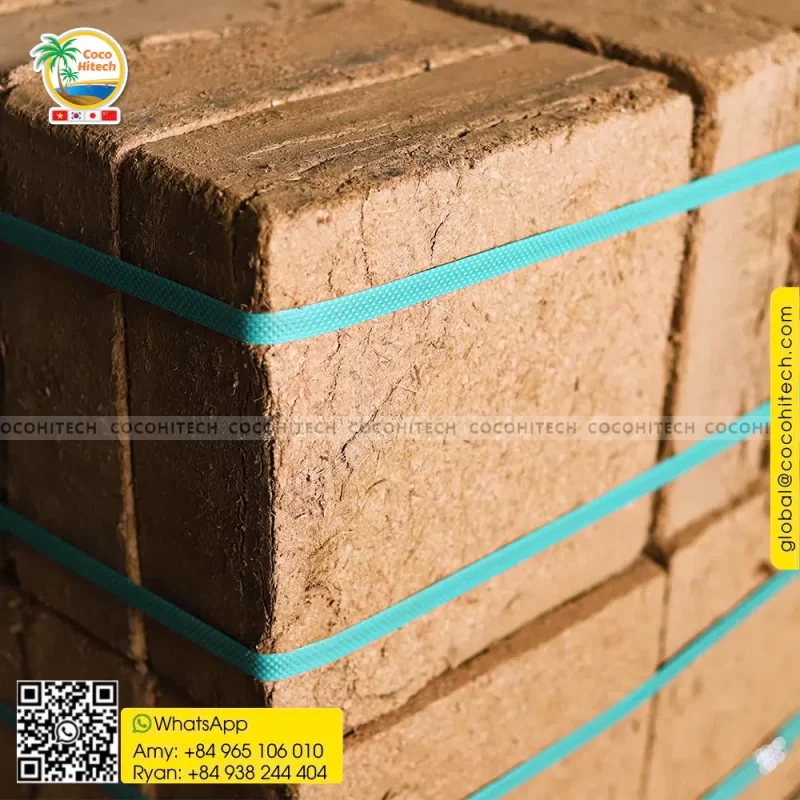
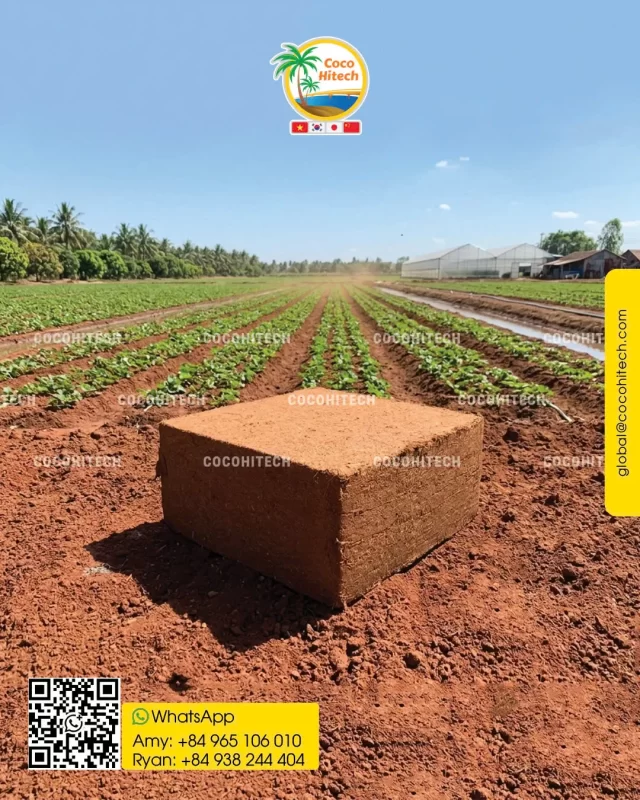
High EC coco peat has not undergone the same level of salt-reduction treatment as Low EC material.
It may be suitable for applications where the buyer performs additional washing or where strict EC control is not required. Before using High EC coco peat for sensitive plants, users should test the material and carry out appropriate washing or buffering when necessary.
Main Applications of Coco Peat Block 5 Kgs
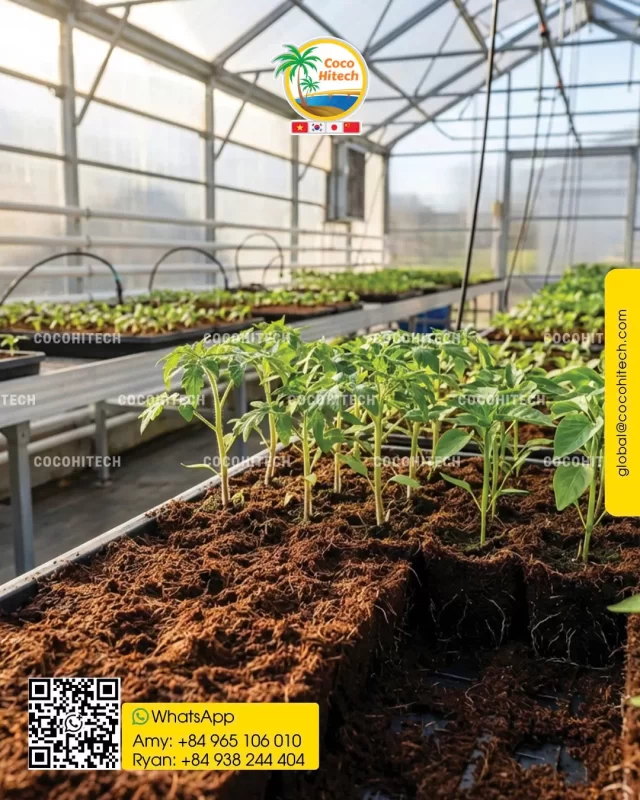
Seed Germination and Seedling Production
The fine structure of coco peat creates a uniform environment around seeds. Its moisture-retention capacity helps support consistent germination when irrigation and nutrient management are properly controlled.
Coco peat is commonly used in:
- Seedling trays
- Nursery cells
- Propagation systems
- Young plant production
Greenhouse Cultivation
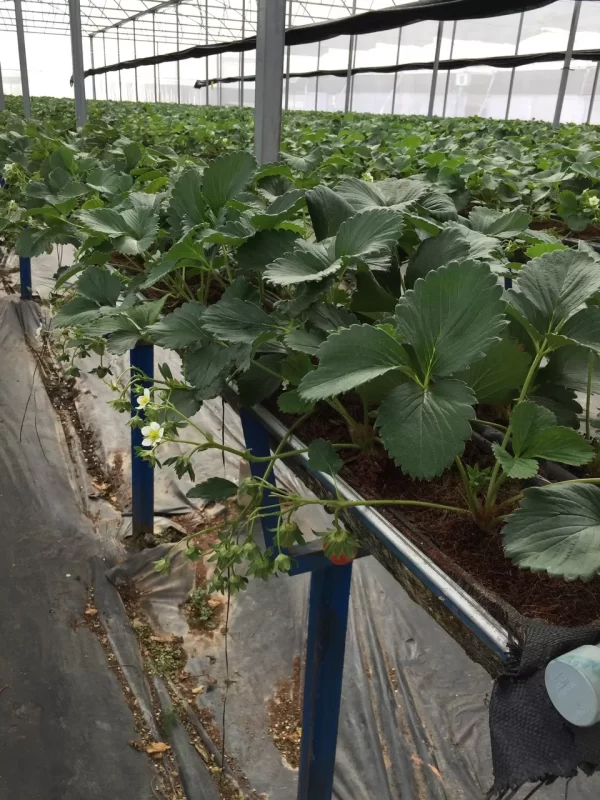
Commercial growers use coco peat in greenhouses for vegetables, flowers, herbs, and other high-value crops.
It can be used as a main component in customized substrate blends or combined with coco chips to create a balance between moisture retention and drainage.
Potting Soil and Substrate Blends
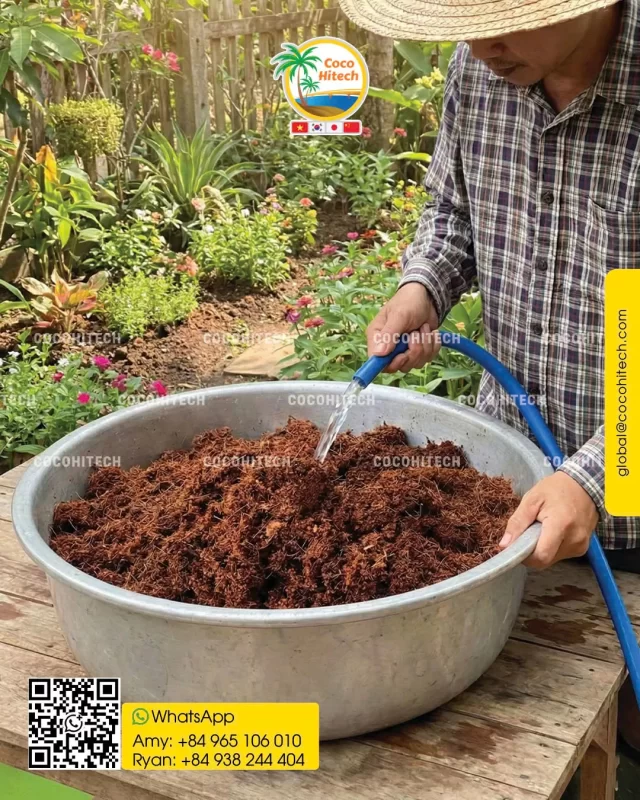
The 5 kg coco peat block is frequently used by potting-soil manufacturers and nurseries as a base ingredient.
It can be mixed with:
- Coco chips
- Perlite
- Pine bark
- Compost
- Rice husk
- Vermiculite
- Other mineral or organic growing-medium components
The ideal mixing ratio depends on the plant species, irrigation system, container size, climate, and required drainage level.
Vegetable and Flower Production
Coco peat can be used for cultivating tomatoes, cucumbers, peppers, strawberries, flowers, herbs, and leafy vegetables.
Growers should manage nutrients carefully because coco peat is primarily a growing medium rather than a complete fertilizer. A suitable fertilization program is still required to provide essential nutrients to the crop.
Soil Improvement
When incorporated into suitable soil, coco peat can help improve moisture retention and soil structure.
However, the application rate should be adapted to local soil conditions. Heavy clay soil, sandy soil, containers, raised beds, and greenhouse systems may require different mixing ratios.
How to Expand a 5 Kg Coco Peat Block
Expanding a Coco Peat Block 5 Kgs is simple:
- Place the block in a clean container or on a suitable expansion surface.
- Add clean water gradually across the block.
- Allow the block sufficient time to absorb the water.
- Break apart the softened material by hand or with suitable equipment.
- Continue adding water until the coco peat is fully expanded.
- Fluff the material to create an even and loose structure.
- Test the moisture level and EC before planting.
Avoid adding excessive water all at once, especially when working in a limited container. Gradual hydration helps produce a more consistent expanded medium.
For commercial operations, expansion machines or automated hydration systems may be used to process larger quantities efficiently.
Factors to Check Before Buying Coco Peat Blocks
Not all coco peat blocks have the same quality. Buyers should evaluate several factors before placing an order.
EC and Testing Method
Always request the EC specification and confirm how it was measured. An EC value without a defined testing method may not provide enough information for comparison.
pH Range
A pH range of approximately 5.5–6.5 is commonly requested for horticultural coco peat. However, the appropriate range may vary according to the crop and nutrient-management program.
Expansion Volume
A quality Coco Peat Block 5 Kgs should provide a stable and clearly stated expansion volume. Buyers should compare expanded volume, block weight, moisture content, and compression ratio rather than evaluating the price alone.
Moisture Content
Excessively wet blocks increase shipping weight and may affect storage stability. The blocks should be sufficiently dried and stored in appropriate conditions before export.
Fiber and Particle Content
The structure of coco peat can vary depending on screening and processing. Some buyers prefer finer material, while others require a controlled percentage of short fiber to improve structure.
Foreign Materials and Contamination
The product should be checked for stones, plastic, metal, excessive sand, mold, and other unwanted materials.
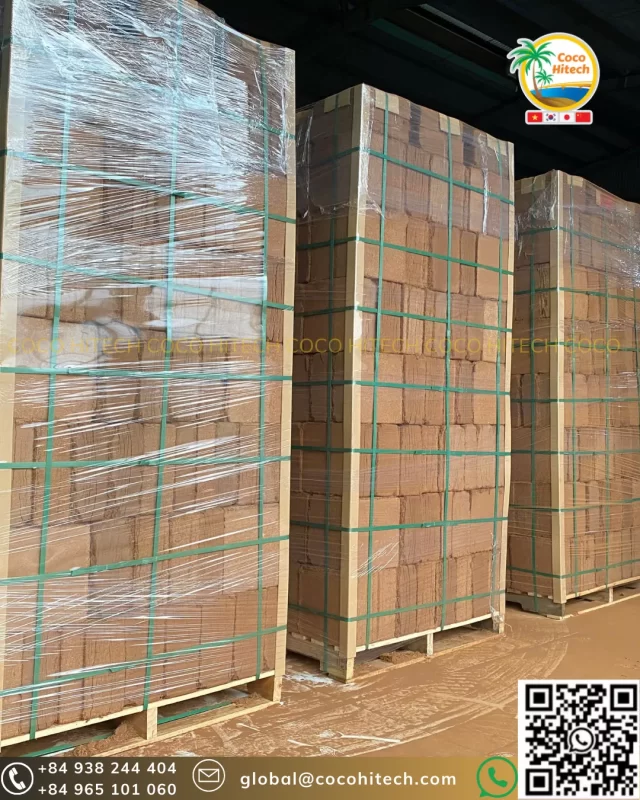
Packaging and Palletization
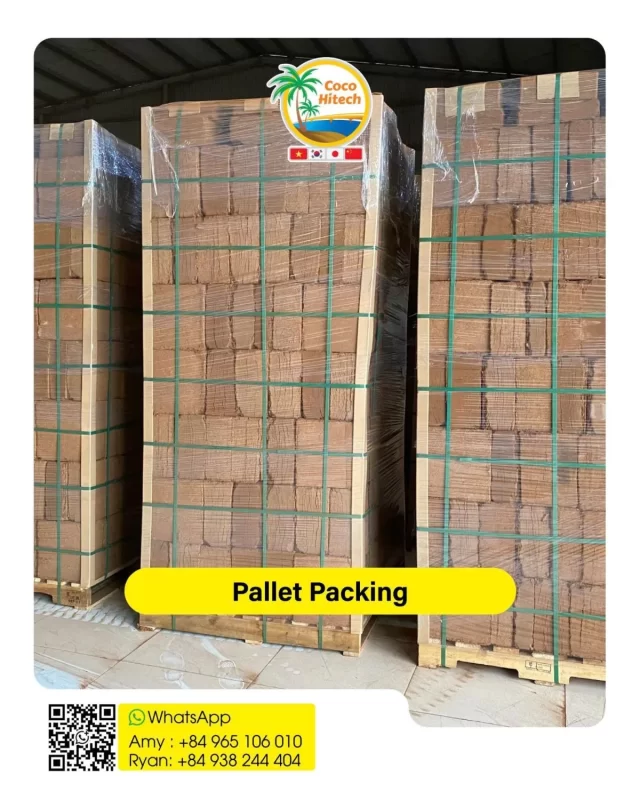
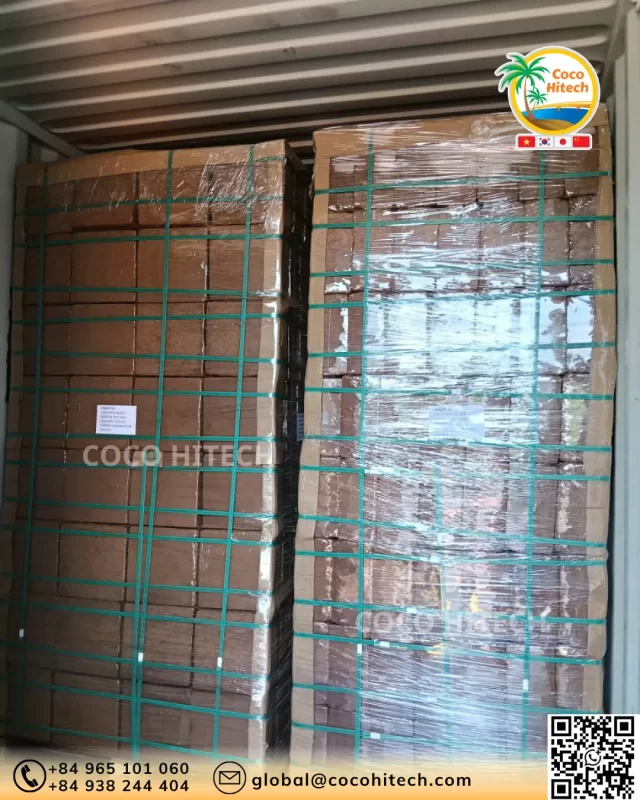
Strong packaging protects the blocks during loading, shipping, storage, and unloading. Export buyers should confirm:
- Block dimensions
- Packaging material
- Number of blocks per pallet
- Pallet dimensions
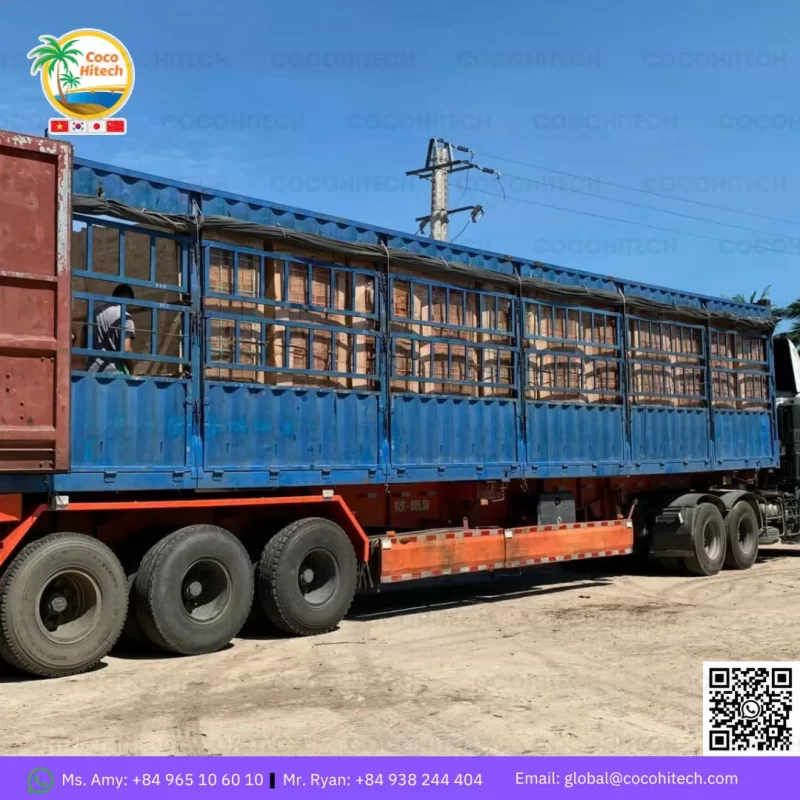
- Container loading quantity
- Private-label requirements
Advantages of Importing Coco Peat Blocks from Vietnam
Vietnam has an established coconut-processing industry and access to abundant coconut husk raw materials. This allows Vietnamese manufacturers to produce coco peat products for agricultural and horticultural markets.
Vietnamese Coco Peat Block 5 Kgs products can be supplied for:
- Commercial farms
- Growing-medium manufacturers
- Agricultural distributors
- Importers and wholesalers
- Greenhouse operators
- Plant nurseries
- Landscaping suppliers
For international buyers, it is important to work with a supplier capable of controlling raw materials, processing, screening, washing, drying, compression, packaging, and export documentation.
Coco Peat Block 5 Kgs from COCO HITECH
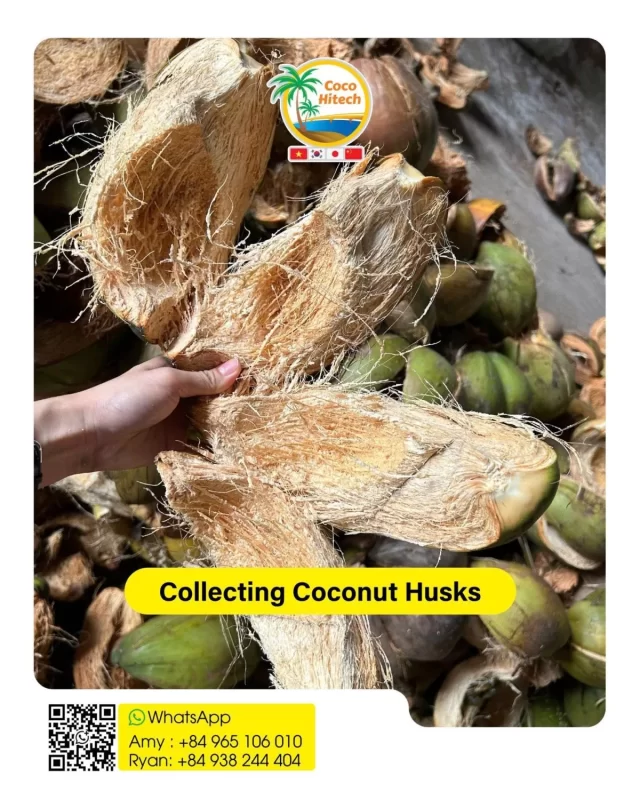
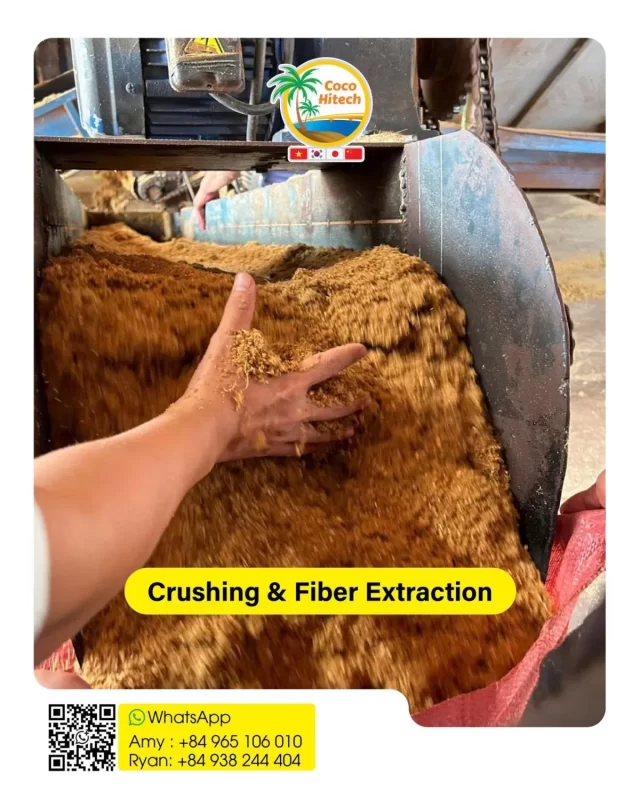
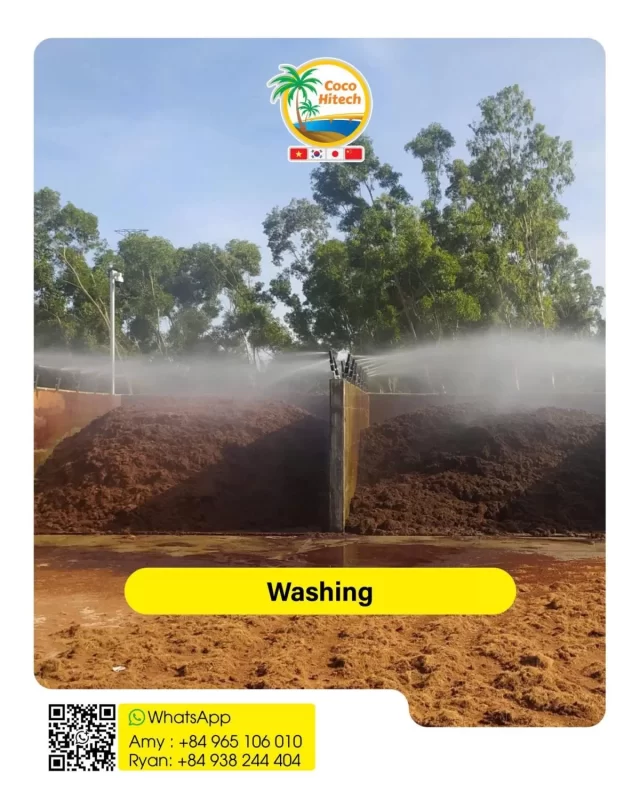
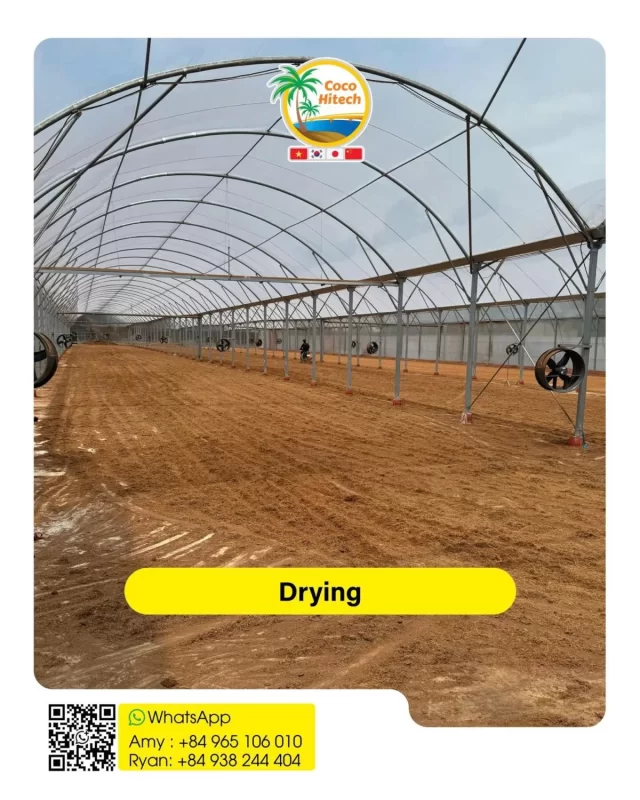
COCO HITECH supplies coconut-based growing media for agricultural and horticultural applications.
Our Coco Peat Block 5 Kgs is produced from processed coconut husk pith and compressed for convenient storage and international transportation.
Depending on the customer’s requirements, specifications may include:
- Washed Low EC coco peat
- High EC coco peat
- Controlled pH range
- Approximately 70–75 liters of expanded volume
- Export packaging
- Palletized container loading
- Customized product specifications
- Private-label packaging
As a Vietnam-based coconut product supplier, COCO HITECH supports international customers with product information, specifications, quotations, packaging options, and export arrangements.
COCO HITECH – Vietnam Coco Peat Block Manufacturer and Export Supplier
Independent business directories also list COCO HITECH as a verified Vietnamese manufacturer and exporter of coir rope and other coconut products.
OUR INTERNATIONAL TEAM SALE
- 대표: Mr.Ryan (Vietnam): +84 938244404(Kakaotalk, Wechat, Whatsapp)
- Amy (English) : +84 965106010 (WhatsApp, Kakao, Line)
- Ryna ( 한국 영업 담당자 ): +84 0364775030
- Vi (中文)+84397317401| 微信ID: Nttv0608
- Website: https://cocohitech.com
- Website: https://kr.cocohitech.com(Korea)
- Website: https://cocohitech.jp/ (Japan)
- Youtube: https://www.youtube.com/watch?v=X7uwnNDKJ4M&t=70s
- Instagram: https://www.instagram.com/cocohitech/
COCO HITECH JSC
261-263 Phan Xich Long Street, Ward 2, Phu Nhuan District, Ho Chi Minh City, Vietnam Tel: +8493 8244404 (Vietnam) Email: info@cocohitech.com https://cocohitech.com | https://coconutpowder.net