
Finding a reliable coir mulch mat factory in Vietnam is an important step for importers, garden-product distributors, nurseries, agricultural suppliers, and landscaping companies looking for natural alternatives to plastic ground covers.
A qualified manufacturer should provide more than a competitive price. International buyers also need consistent materials, clearly defined dimensions, suitable packaging, product samples, quality inspection, and dependable export support.
COCO HITECH is a Vietnam-based manufacturer and exporter of coconut coir products. Its product range includes woven coir mulch mats, non-woven coir felt mats, coconut fiber products, coir mats, coir rope, and other products for horticultural and landscaping applications. The company lists factory operations in Ben Tre Province and a representative office in Ho Chi Minh City.
What Is a Coir Mulch Mat?
Table of Contents
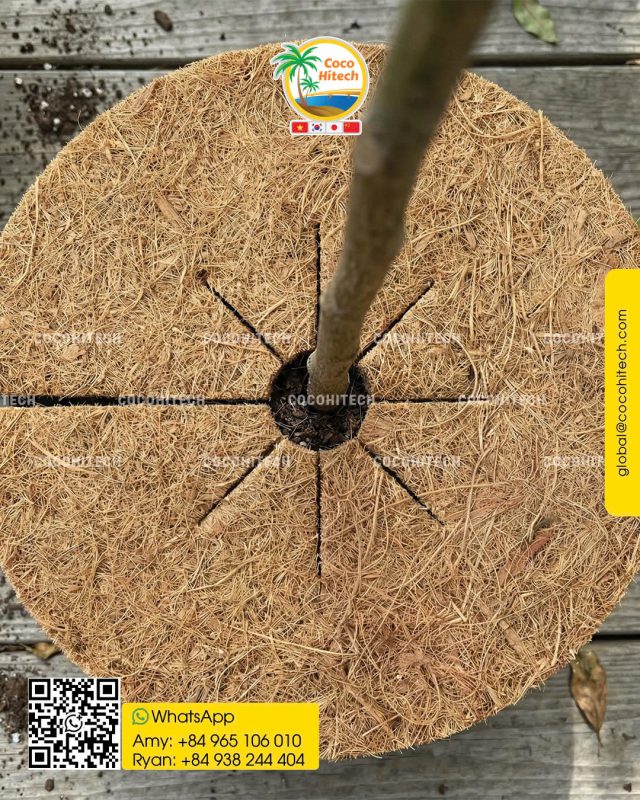
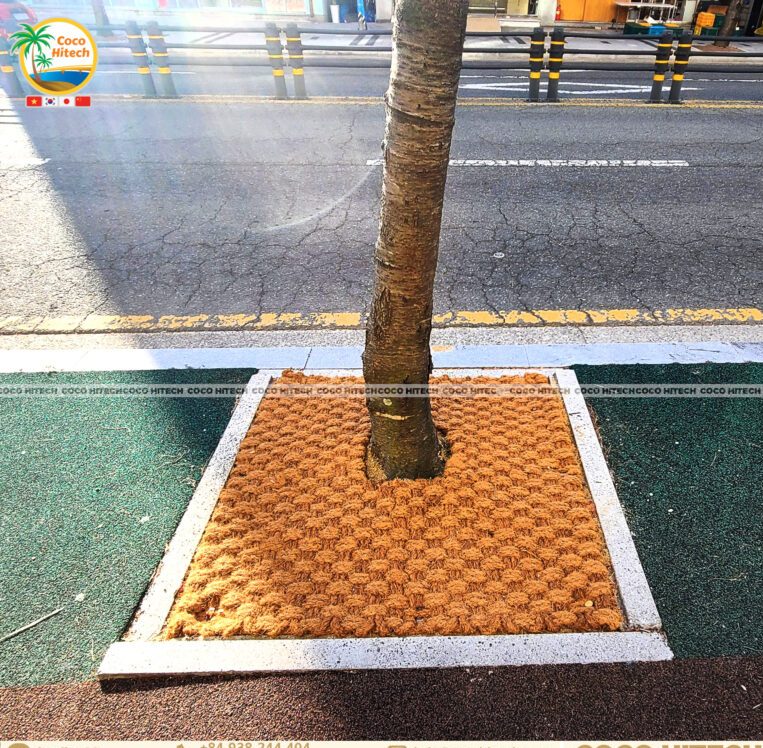
A coir mulch mat is a protective ground cover made from processed coconut husk fiber. It is placed on the soil surface around trees, shrubs, flowers, nursery plants, and potted plants.
The product is commonly manufactured as:
- A round coconut fiber disc
- A square or rectangular mat
- A tree ring with a center opening
- A mat with a slit for installation around an existing plant
- A roll that can be cut according to the project
- A woven coconut fiber mat
- A needle-punched or non-woven coir felt mat
COCO HITECH’s current product information presents both round and rectangular woven mats, as well as non-woven mats produced by compressing and needle-punching loose coir fibers into a felt-like structure.
Unlike loose bark, straw, or wood chips, a preformed coir mulch mat provides a defined covering area. It is easy to place around an individual tree or inside a plant container and is less likely to scatter during watering, handling, or transportation.
What Does a Coir Mulch Mat Do?
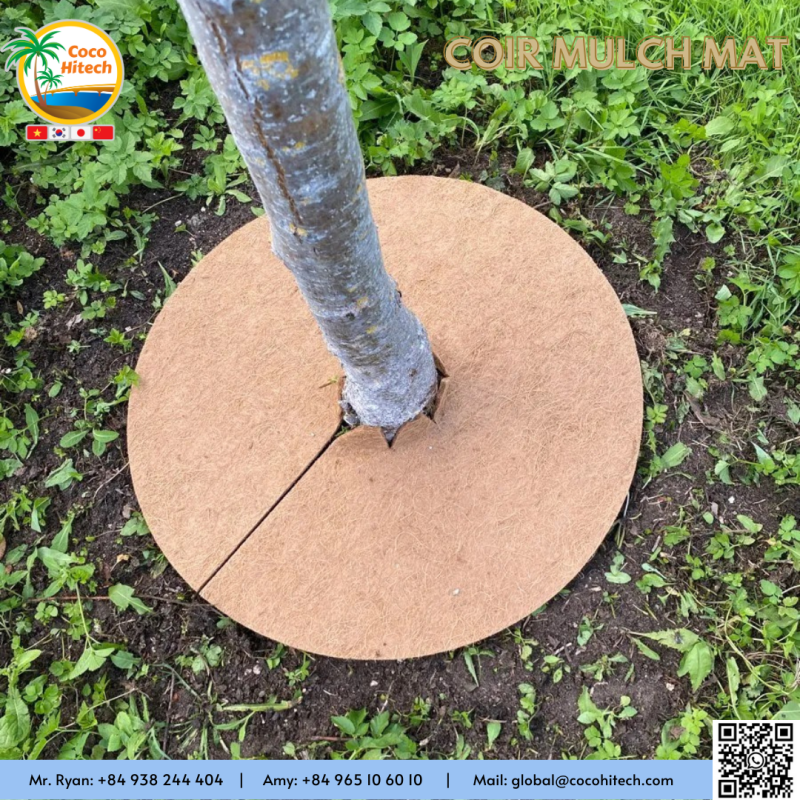
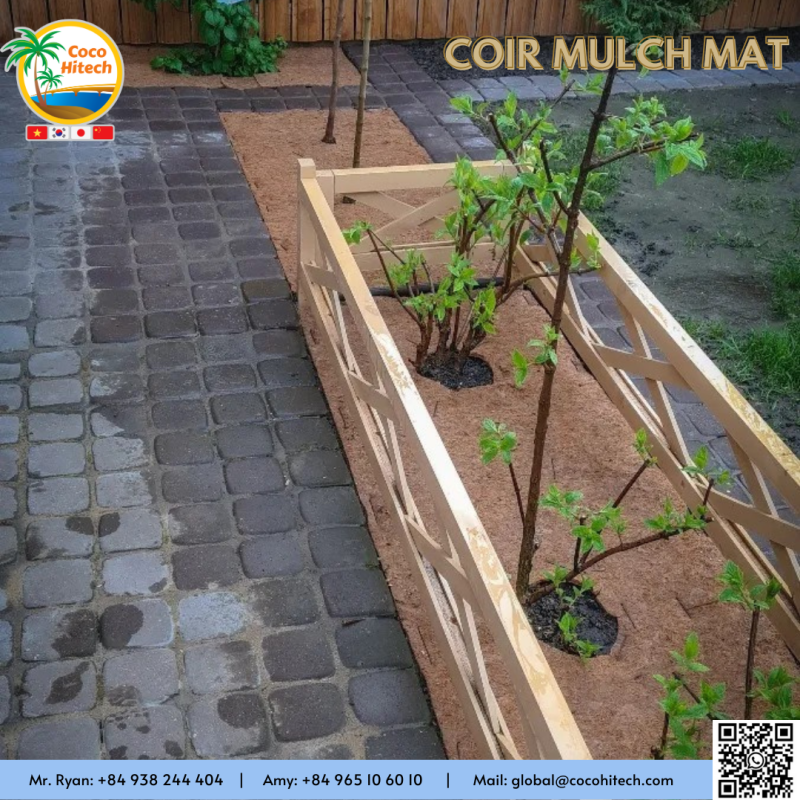
A coir mulch mat covers exposed soil around the plant. This physical layer helps reduce the amount of sunlight reaching weed seeds while slowing direct evaporation from the soil.
Mulching is generally used to improve moisture regulation, suppress weeds, moderate soil temperature, and protect the soil surface. However, actual performance depends on the mulch material, thickness, coverage, installation method, soil, climate, and irrigation conditions.
A coir mulch mat may therefore help with:
Weed Suppression
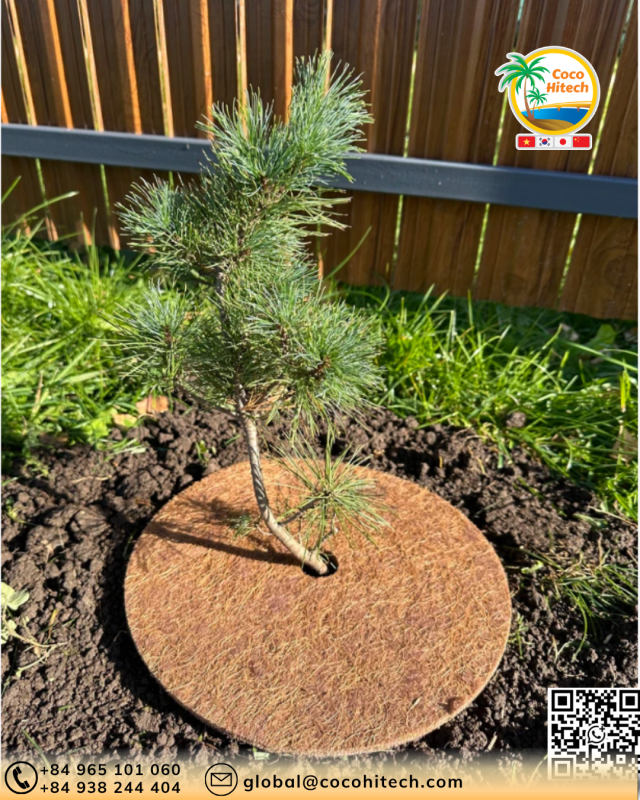
The mat blocks part of the sunlight reaching the soil surface, making it more difficult for many weed seeds to germinate.
It should be described as a weed-suppression product, not as a product that permanently eliminates all weeds. Weeds can still emerge through the center opening, uncovered edges, installation gaps, or organic material accumulated on top of the mat.
Moisture Conservation
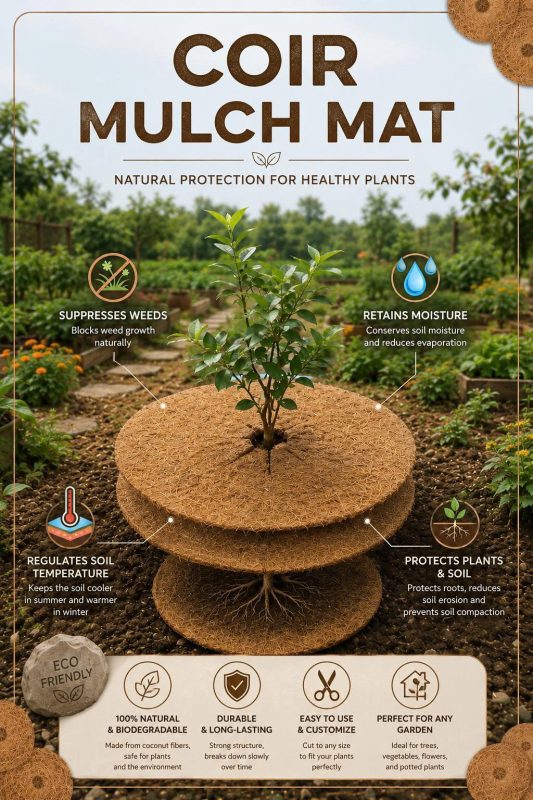
Covering exposed soil can slow moisture loss caused by direct sunlight, heat, and wind.
This may help the soil remain moist for longer between irrigation cycles. Actual water savings will vary according to the plant, growing medium, climate, mat construction, and irrigation method.
Soil-Surface Protection
A coir mat helps reduce the direct impact of rain and irrigation water on the soil surface. This can limit soil splashing and the movement of loose surface particles.
For slopes or erosion-control projects, buyers should distinguish between a small tree mulch mat and a structural coir textile. These products can have different weights, mesh structures, tensile requirements, and installation methods.
Cleaner Plant Presentation
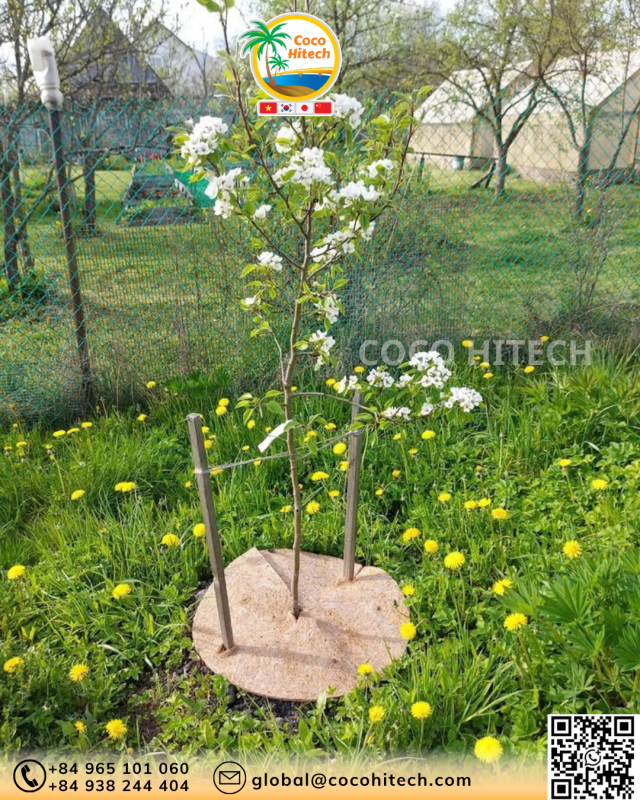
Round coir discs can create a clean, natural-looking surface inside decorative pots and nursery containers.
They can also reduce the amount of loose growing medium or mulch displaced during watering and transportation.
Root-Zone Temperature Moderation
Mulch can reduce rapid changes in soil-surface temperature. It may help protect the root zone from direct sun exposure and sudden environmental changes, although the result depends strongly on the thickness and coverage of the product.
coco mulch mat is a natural ground-covering product made from coconut coir fiber. It is placed around plants, young trees, shrubs, or inside pots to help suppress weed growth, reduce moisture loss, and protect the soil surface.
Unlike loose mulch materials that may be displaced by watering, wind, or routine maintenance, a coco mulch mat remains in a defined position around the plant. Its natural brown appearance also blends well with gardens, nurseries, orchards, public landscapes, and decorative planters.
Coconut coir is produced from coconut husks and is widely used in horticultural products. Coir-based materials can be manufactured as mulch blankets, tree rings, planter liners, growing media, erosion-control products, and other natural-fiber solutions.
Main Types Produced by a Coir Mulch Mat Factory in Vietnam
Before requesting a quotation, buyers should identify which product construction is suitable for their market.
Woven Coir Mulch Mat
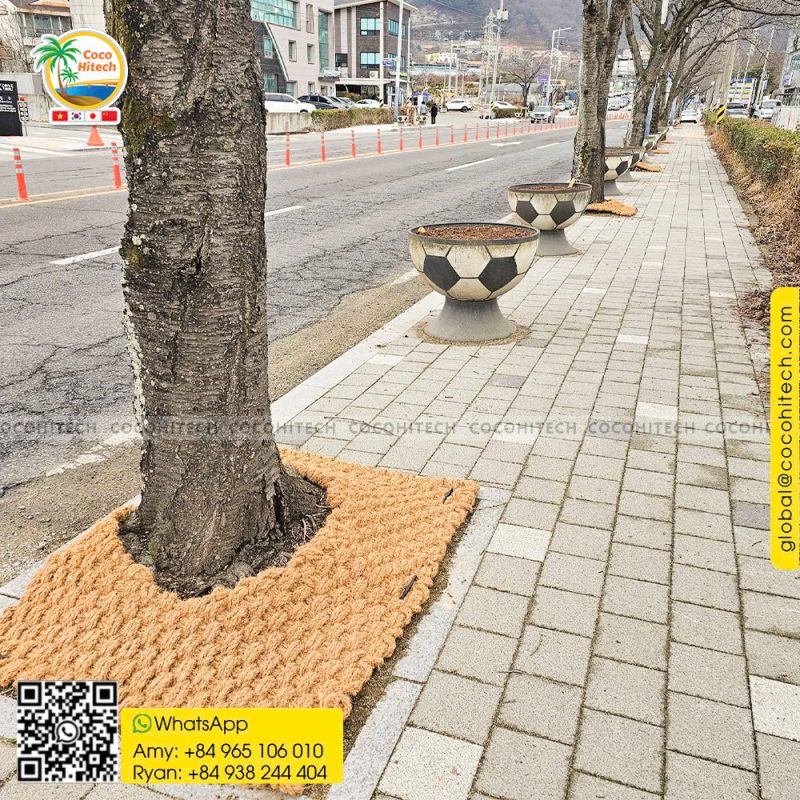
A woven mat is made by interlacing coir yarn or rope into a defined pattern.
The finished product generally has:
- A visible woven structure
- Relatively high structural strength
- Good airflow and water permeability
- A traditional natural-fiber appearance
- Better suitability for outdoor tree-covering applications
- Round, square, or rectangular configurations
COCO HITECH describes its woven coir mulch mat as a natural coconut-fiber product available in round and rectangular forms. The company also presents woven mats as a stronger option for tree-root coverage and outdoor landscaping.
Non-Woven Coir Mulch Mat
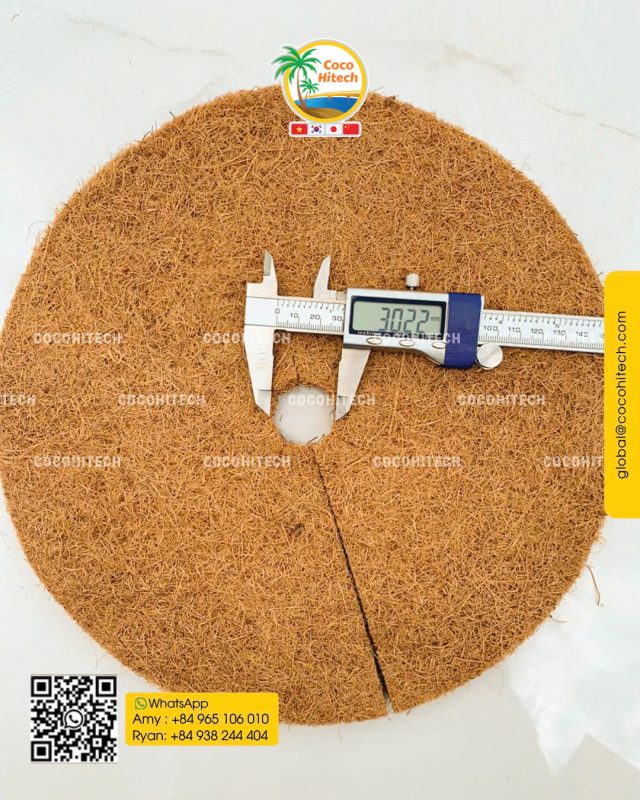
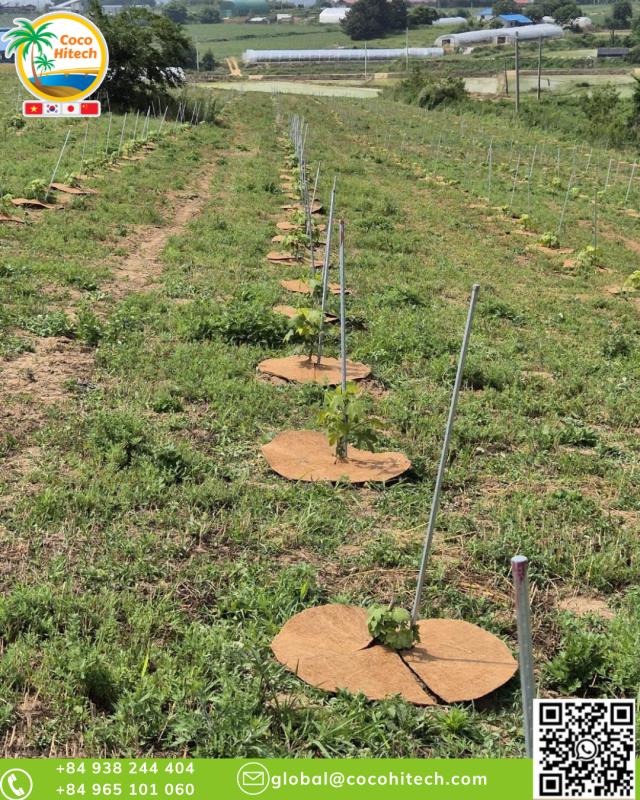
A non-woven mat is normally made by arranging loose coir fibers and bonding or mechanically needle-punching them into a felt-like layer.
Typical characteristics include:
- A relatively smooth and even surface
- Greater flexibility
- Easy cutting into custom shapes
- Suitability for pots and nursery containers
- Good coverage of exposed growing media
- Convenient production of round mulch discs
COCO HITECH describes its non-woven option as a compressed, needle-punched coir fiber sheet that is flexible and suitable for gardening, nurseries, greenhouses, tree-base protection, and decorative landscaping.
Latex-Bonded Coir Mat
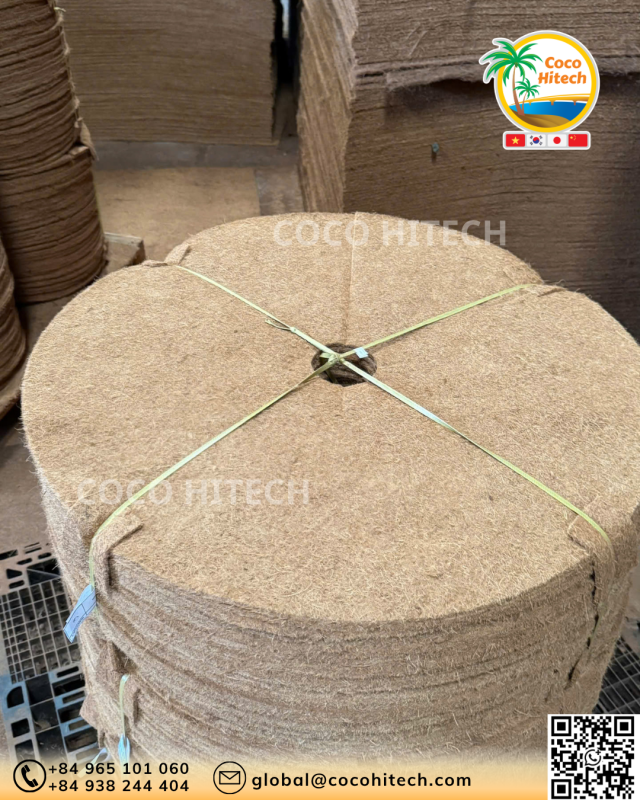
Some non-woven coir mats use natural latex or another bonding material to help the fibers maintain their shape.
Buyers should not assume that every brown coconut fiber mat has the same composition. The quotation and technical specification should clearly state:
- Coir fiber percentage
- Binder type
- Binder percentage
- Natural or synthetic binder
- Latex content
- Odor requirements
- Water resistance
- Intended service life
- Biodegradability requirement
The coconut fiber itself is a natural material. However, the environmental characteristics of the complete product also depend on the binder, thread, backing, coating, label, and packaging.
Woven vs. Non-Woven Coir Mulch Mat
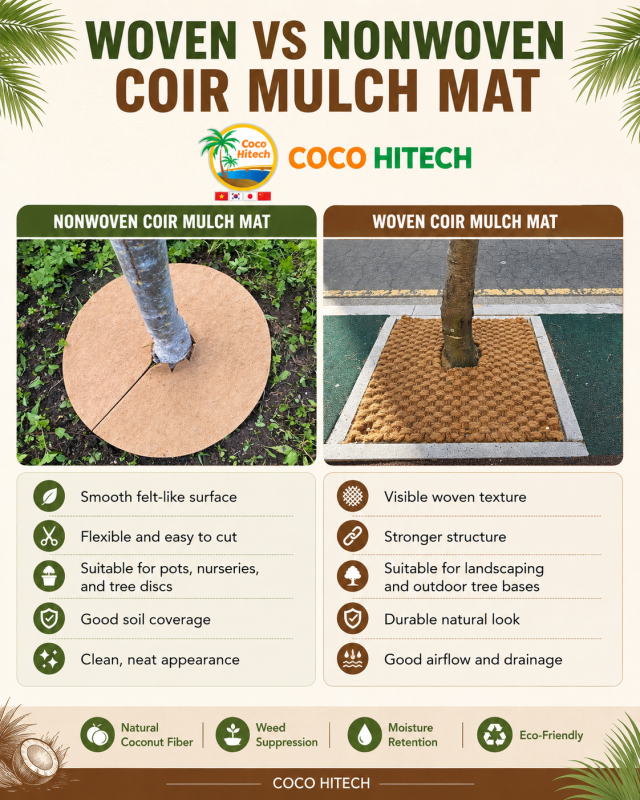
| Selection Factor | Woven Coir Mulch Mat | Non-Woven Coir Mulch Mat |
|---|---|---|
| Structure | Interlaced coir yarn | Compressed or needle-punched fiber |
| Appearance | Visible woven pattern | Felt-like surface |
| Flexibility | Generally lower | Generally higher |
| Structural strength | Usually higher | Depends on density and binder |
| Custom cutting | Possible but more limited | Relatively easy |
| Water movement | Through openings in the weave | Through spaces between fibers |
| Common applications | Trees, outdoor landscaping, decorative covers | Pots, nurseries, greenhouses, tree discs |
| Shape options | Round, square, rectangular | Round, square, custom cut |
| Important specification | Yarn, weave, openings and edge finish | Density, thickness, binder and fiber distribution |
Neither construction is automatically better in every application. The appropriate option depends on the buyer’s target market, installation conditions, required appearance, expected durability, and price level.
Applications of Coir Mulch Mats
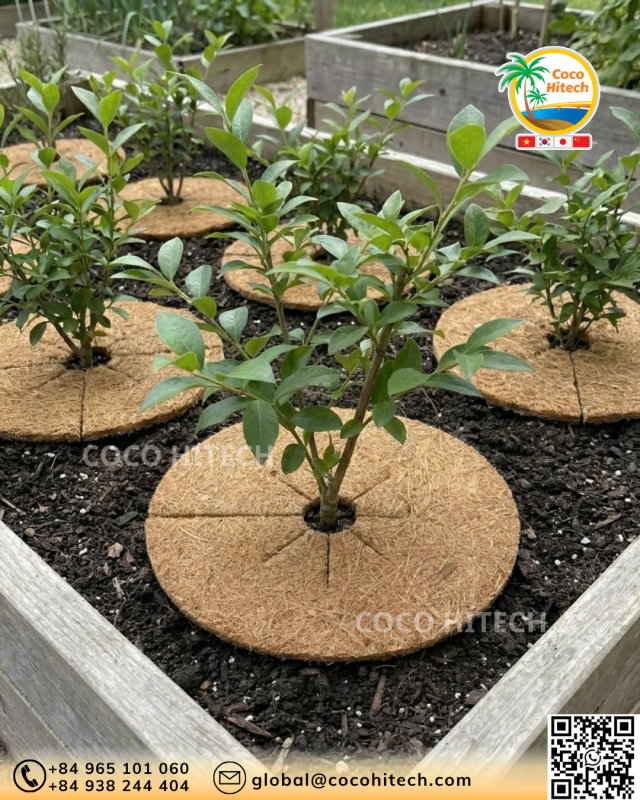
Plant Nurseries
Nurseries can place round mulch discs on top of the growing media in containers.
Possible benefits include:
- Reduced exposed growing-media surface
- Cleaner plant presentation
- Less loose material during handling
- Easier installation than loose mulch
- Natural appearance for retail plants
The disc should match the inside diameter of the pot and should not block irrigation water from reaching the growing medium.
Landscaping Projects
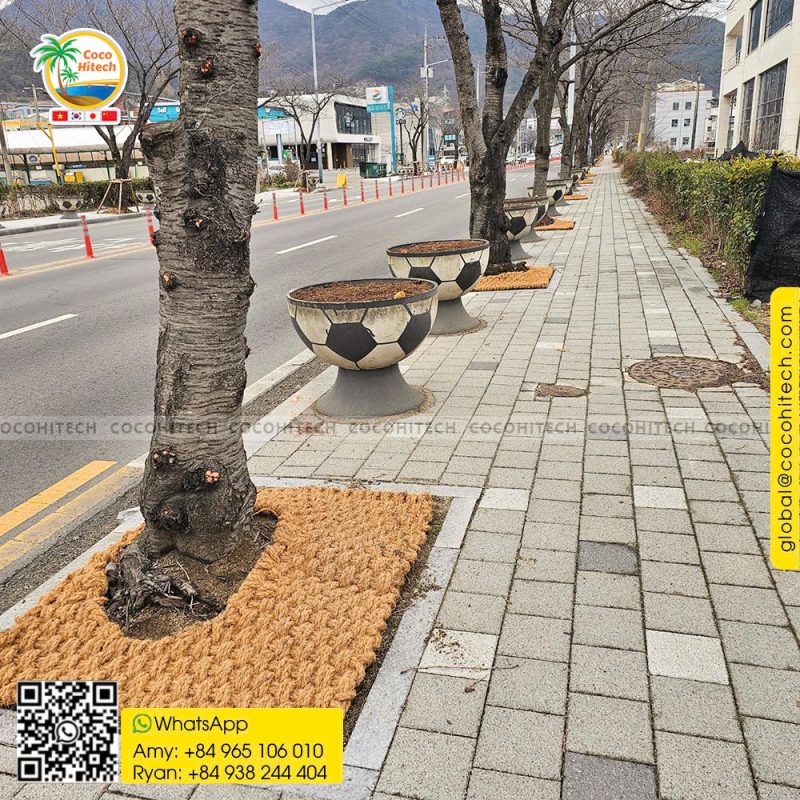
Coir mulch mats can be installed around trees, shrubs, ornamental plants, and flowers in:
- Public parks
- Residential gardens
- Hotels and resorts
- Urban landscaping
- Roadside planting projects
- Commercial properties
- Decorative outdoor areas
For windy locations, the mat may require suitable fixing pins. The pin type and installation quantity should be determined according to soil hardness, mat size, site exposure, and landscape design.
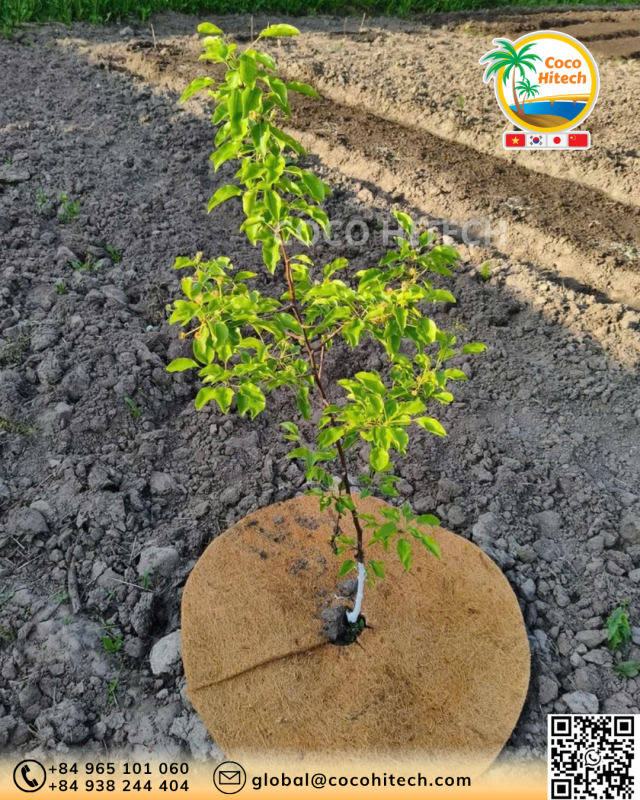
Orchards and Plantations
Tree rings may be used around young fruit trees and perennial plants.
Before ordering for an orchard, buyers should evaluate:
- Tree spacing
- Required coverage diameter
- Existing weed pressure
- Irrigation layout
- Rainfall
- Soil drainage
- Installation labor
- Expected replacement cycle
A small center opening may become too tight as the tree grows. The mat should be inspected and adjusted when necessary.
Potted Plants
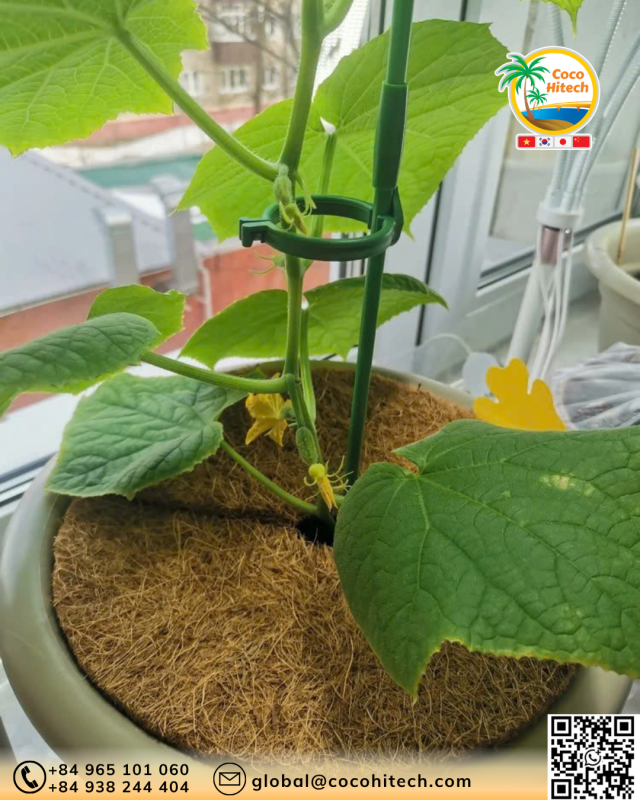
Coconut mulch discs are suitable for:
- Indoor ornamental plants
- Outdoor flowerpots
- Balcony gardens
- Garden-center products
- Retail nursery plants
- Decorative containers
Custom packaging can also be discussed for garden centers, online retailers, and private-label brands.
Tree Protection in Cold Weather
Woven coir mats may also be used as a decorative protective layer around the lower part of trees during cold seasons. COCO HITECH’s product page identifies cold-weather tree covering as one of the uses of its woven mulch mats.
The mat should not be installed in a way that traps excessive moisture tightly against the bark for extended periods.
Customization Options for Wholesale Buyers
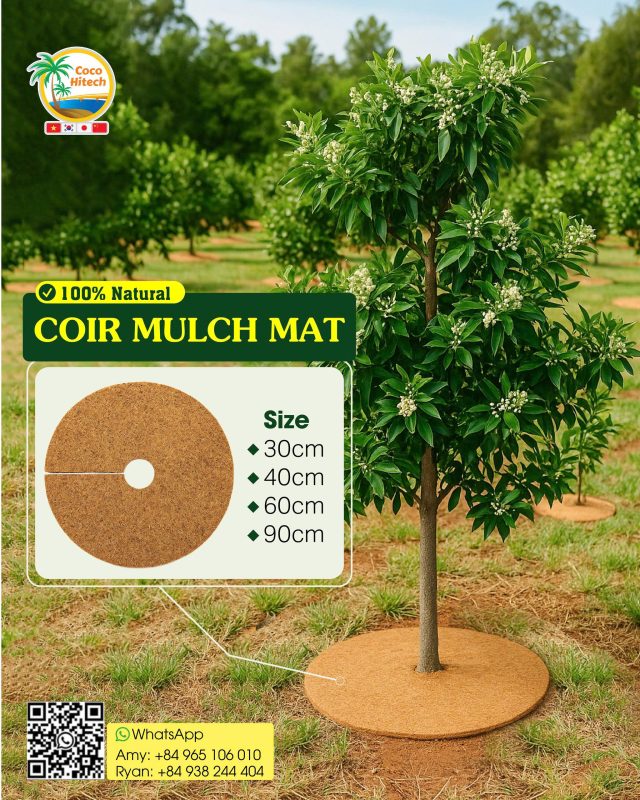
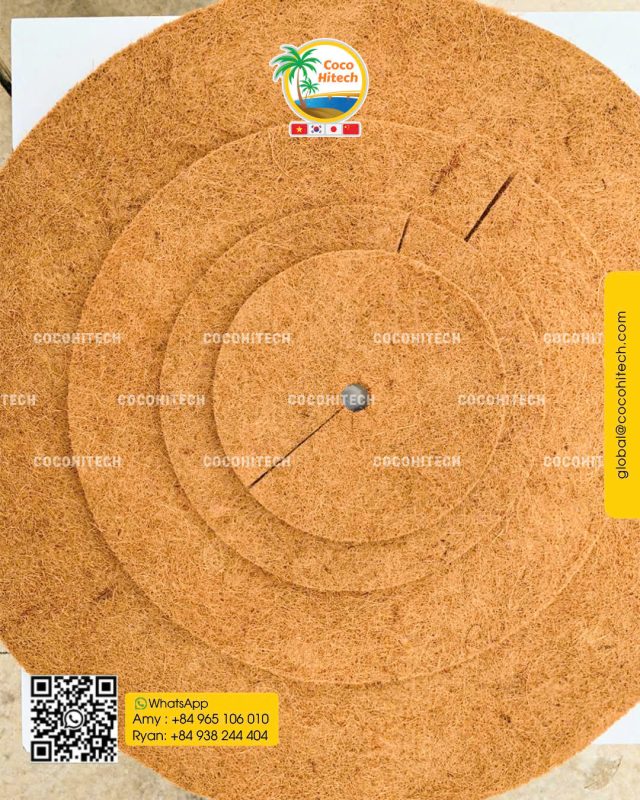
A professional coir mulch mat factory in Vietnam should receive a complete product specification before calculating the final price.
Shape
Available or requested shapes may include:
- Round
- Square
- Rectangle
- Semi-circle
- Tree ring
- Custom die-cut shape
- Roll form
Outer Dimensions
For round products, specify the required diameter.
For square or rectangular products, provide:
- Length
- Width
- Dimensional tolerance
The supplier should not be expected to calculate the correct finished size based only on the pot’s marketing size. Buyers should measure the actual usable inside dimensions of the container.
Thickness
Thickness influences appearance, weight, rigidity, moisture behavior, packing quantity, and production cost.
The technical specification should define:
- Target thickness
- Acceptable minimum and maximum
- Measurement method
- Measurement condition
Natural fiber products may change slightly depending on compression, handling, and moisture. A clear tolerance should therefore be agreed upon before production.
Center Hole
For tree rings and plant discs, specify:
- Hole diameter
- Hole position
- Acceptable tolerance
- Whether the hole is fully cut or partially cut
Installation Slit
The slit allows the mat to be placed around an existing stem or trunk.
Specify:
- Slit length
- Slit direction
- Straight or shaped slit
- Whether the two sides should overlap
- Edge-finish requirements
Density or Product Weight
Two mats with the same diameter and thickness may contain different amounts of fiber.
For more consistent quality, buyers can define:
- Weight per piece
- Weight per square meter
- Acceptable weight tolerance
- Minimum fiber density
Binder and Material Composition
For bonded felt mats, the buyer should confirm whether natural latex, synthetic latex, resin, or another bonding system is used.
Statements such as “100% natural” or “fully biodegradable” should only be included on packaging when the composition of the complete product supports the claim.
Packaging
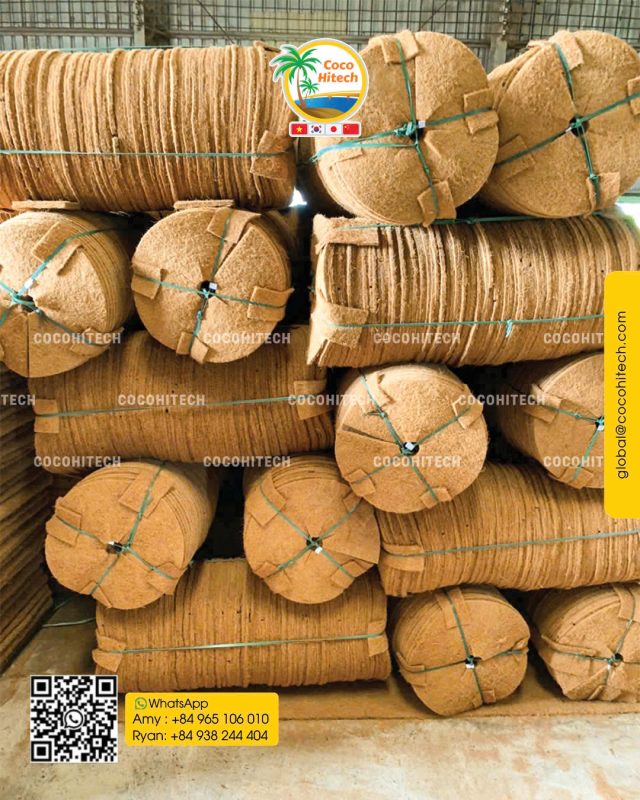
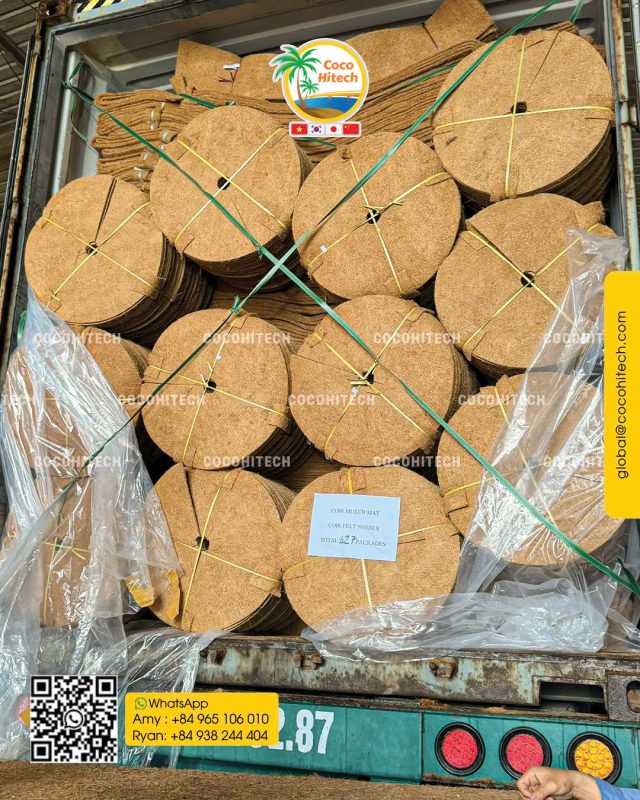
Export packaging may be customized according to the sales channel:
- Bulk bales
- Cartons
- Inner plastic bags
- Retail packs
- Printed labels
- Barcodes
- Private-label packaging
- Shipping marks
- Palletized or non-palletized loading
The most suitable method depends on product shape, compression tolerance, destination market, handling requirements, and container utilization.
Why Work With COCO HITECH?
COCO HITECH focuses on coconut-based materials for horticultural, gardening, and landscaping applications.
Importers, garden-product distributors, nurseries, and landscaping suppliers can contact COCO HITECH to discuss:
- Coco mulch mat applications
- Required dimensions and shapes
- Fiber and construction requirements
- Product samples
- Wholesale packaging
- Private-label requirements
- Export-order planning
- High-density coir mats for durability
- Stable supply with large production capacity
- Competitive pricing for global markets
- Professional export service (Korea, Europe, and more)
OUR INTERNATIONAL TEAM SALE
- 대표: Mr.Ryan (Vietnam): +84 938244404(Kakaotalk, Wechat, Whatsapp)
- Amy (English) : +84 965106010 (WhatsApp, Kakao, Line)
- Ryna ( 한국 영업 담당자 ): +84 0364775030
- Vi (中文)+84397317401| 微信ID: Nttv0608
- Website: https://cocohitech.com
- Website: https://kr.cocohitech.com(Korea)
- Website: https://cocohitech.jp/ (Japan)
- Youtube: https://www.youtube.com/watch?v=X7uwnNDKJ4M&t=70s
- Instagram: https://www.instagram.com/cocohitech/
COCO HITECH JSC
261-263 Phan Xich Long Street, Ward 2, Phu Nhuan District, Ho Chi Minh City, Vietnam Tel: +8493 8244404 (Vietnam) Email: info@cocohitech.com https://cocohitech.com | https://coconutpowder.net