
Coconut Fiber Parasol or Traditional Polyester Parasol?
Table of Contents
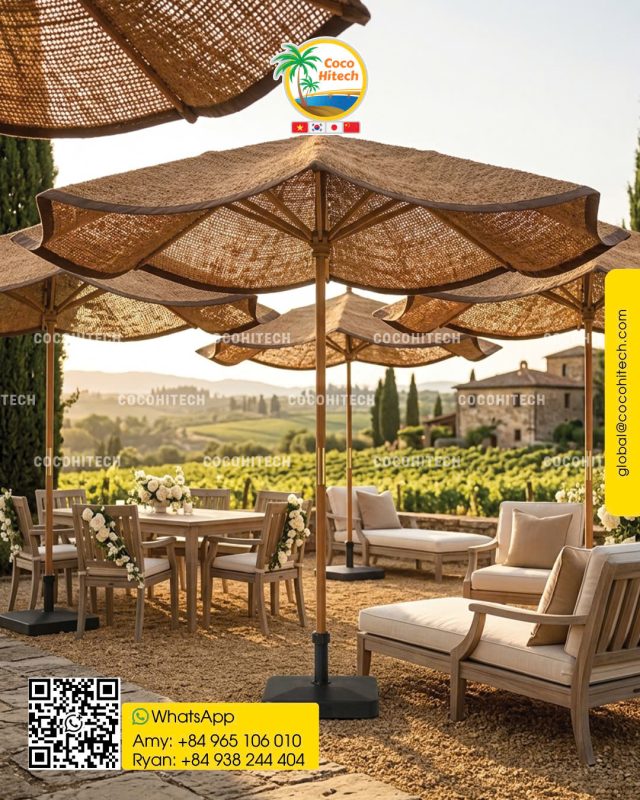
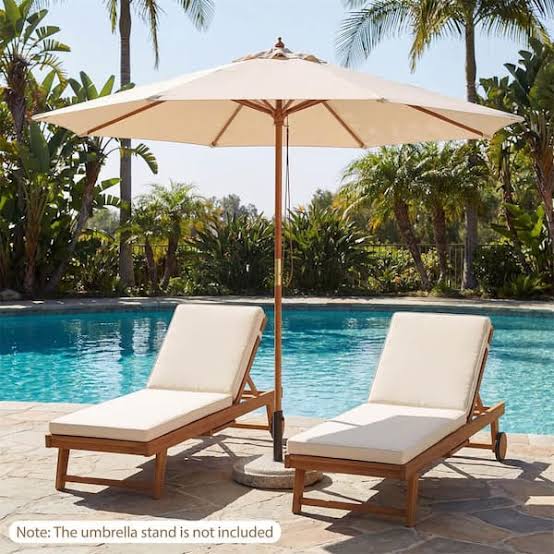
Choosing an outdoor parasol is no longer only about creating shade. For hotels, resorts, restaurants, outdoor cafés, landscaped gardens, swimming pools, and beach clubs, a parasol has also become an important decorative element.
A coconut fiber parasol stands out because its canopy is made from natural coconut coir fibers. Its handcrafted texture, warm brown color, and organic appearance give outdoor spaces a distinctive identity.
In comparison, a conventional parasol is usually covered with polyester fabric. Polyester parasols are widely available, easy to manufacture, and offered in many colors. However, their appearance is often more industrial and less connected to the surrounding natural landscape.
For projects seeking an eco-friendly, tropical, rustic, or premium atmosphere, the COCO HITECH coconut fiber parasol offers an attractive and visually distinctive alternative.
What Is a Coconut Fiber Parasol?
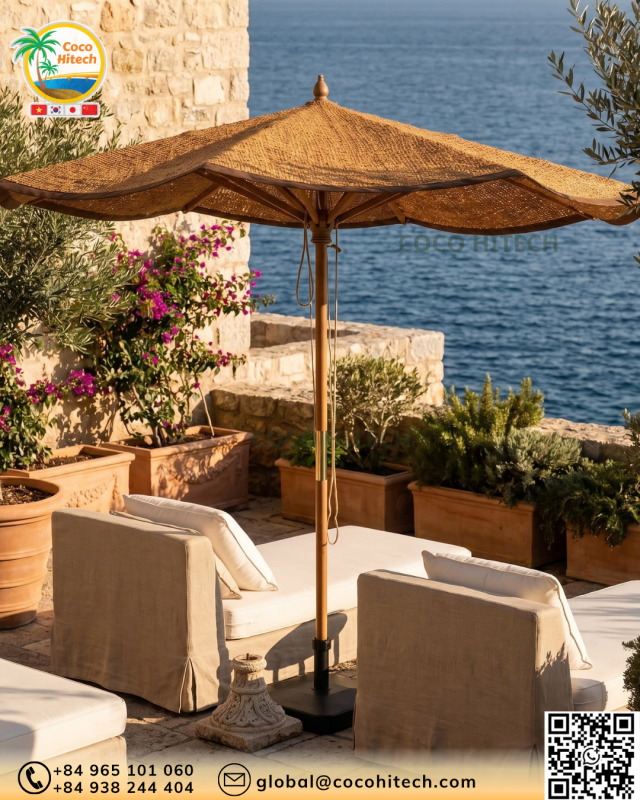
A coconut fiber parasol is an outdoor shade structure with a canopy made from natural coconut fibers, also known as coir fibers.
These fibers are extracted from the outer husk of mature coconuts. After being processed, they are woven or assembled into a natural covering and securely attached to the parasol frame.
COCO HITECH combines the natural coir canopy with a carefully designed wooden structure, creating a harmonious product suitable for premium outdoor projects.
A coconut fiber parasol can be used in:
- Hotels and eco-resorts
- Outdoor restaurants and cafés
- Beach clubs
- Landscaped gardens
- Swimming pool areas
- Wellness and relaxation spaces
- Glamping and camping areas
- Sustainable tourism projects
What Is a Traditional
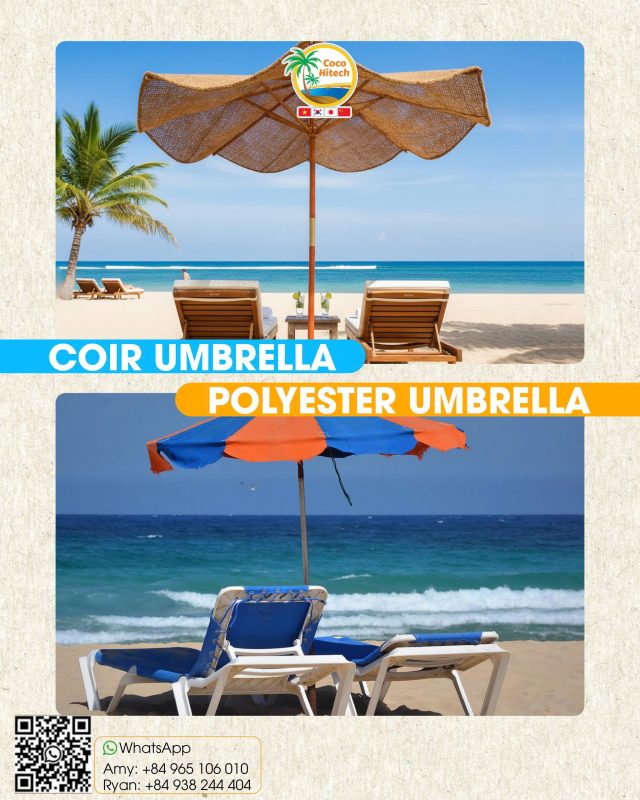
A traditional parasol is commonly fitted with a canopy made from polyester or another synthetic textile.
Polyester fabric can be manufactured in many colors and may be printed with commercial logos or decorative patterns. It can also receive additional treatments to improve water resistance or protection from ultraviolet exposure.
This type of parasol is common in residential and commercial spaces. It provides practical shade, but its aesthetic value depends heavily on the fabric quality, color, frame design, and overall construction.
Coconut Fiber Parasol vs Polyester Parasol
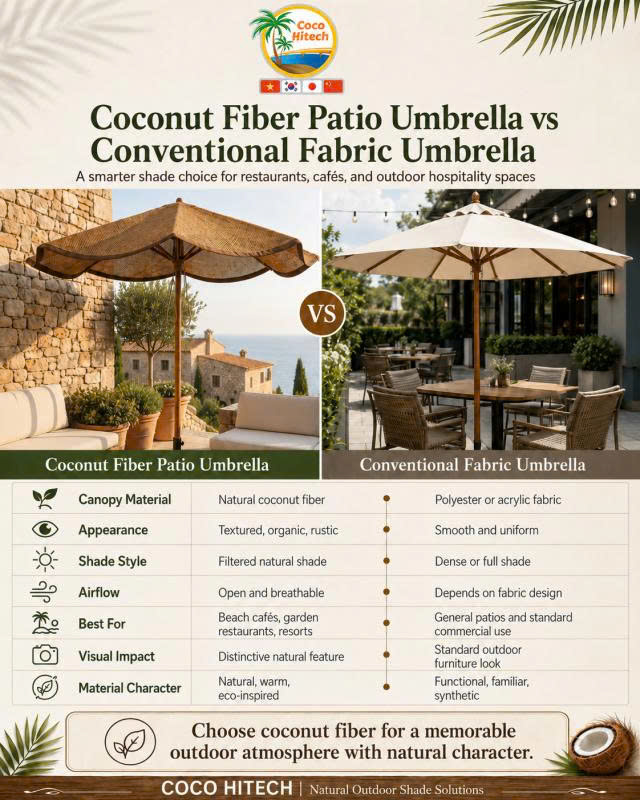 coir parasol
| Comparison factor | Coconut fiber parasol | Traditional polyester parasol |
|---|---|---|
| Canopy material | Natural coconut coir fiber | Synthetic polyester fabric |
| Appearance | Natural, handcrafted, warm, and distinctive | Smooth, regular, and industrial |
| Main style | Tropical, rustic, bohemian, and eco-friendly | Classic, commercial, or contemporary |
| Light filtration | Creates soft shade with filtered sunlight | Usually creates denser and more uniform shade |
| Ventilation | Natural airflow through the fiber structure | Depends on the canopy design |
| Color options | Natural brown and earthy tones | Wide range of colors |
| Decorative value | Strong visual and architectural impact | Varies depending on the model |
| Customization | Size, shape, fiber density, and structure | Colors, prints, logos, and patterns |
| Best applications | Resorts, hotels, beaches, gardens, and nature-inspired cafés | General commercial and residential use |
| End of life | Natural fiber is biodegradable | Synthetic fabric is more difficult to decompose |
1. Different Canopy Materials
The first major difference is the material used to produce the canopy.
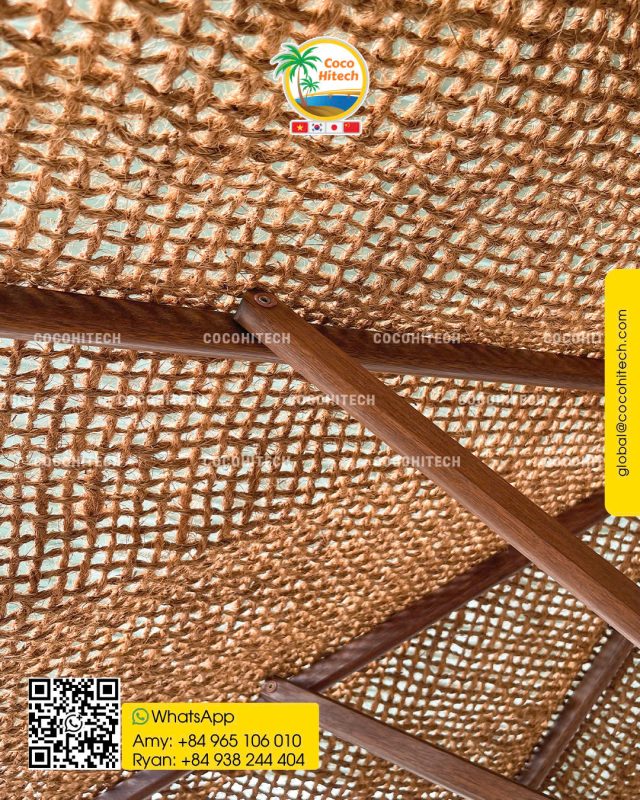
A coconut fiber parasol uses natural plant-based fibers obtained from coconut husks. The texture of the individual fibers remains visible, giving the canopy an authentic and handcrafted character.
A polyester parasol uses a synthetic material manufactured under controlled industrial conditions. Its surface is normally smoother, more regular, and more uniform.
Polyester can create a clean and modern appearance, but it does not offer the same visual depth and organic texture as coconut fiber.
2. A Natural Beauty That Is Difficult to Reproduce
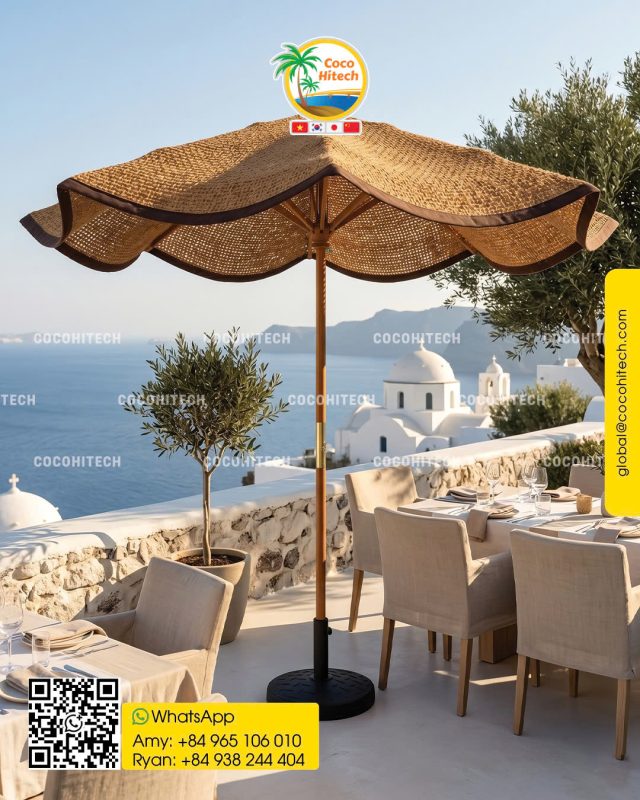
The beauty of a coconut fiber parasol comes from its natural variations.
The coconut fibers are not completely identical. Slight differences in color, thickness, direction, and texture may appear across the canopy. Rather than being defects, these variations give the parasol a lively and authentic surface.
Under sunlight, the brown fibers develop warm golden highlights. Light passes gently through the small openings between the fibers, forming delicate and irregular shadows on the ground.
This effect is difficult to reproduce with a completely uniform synthetic fabric.
A coconut fiber parasol is therefore more than a functional outdoor shade product. It becomes a decorative feature capable of transforming the atmosphere of an entire space.
3. Soft and Comfortable Natural Shade
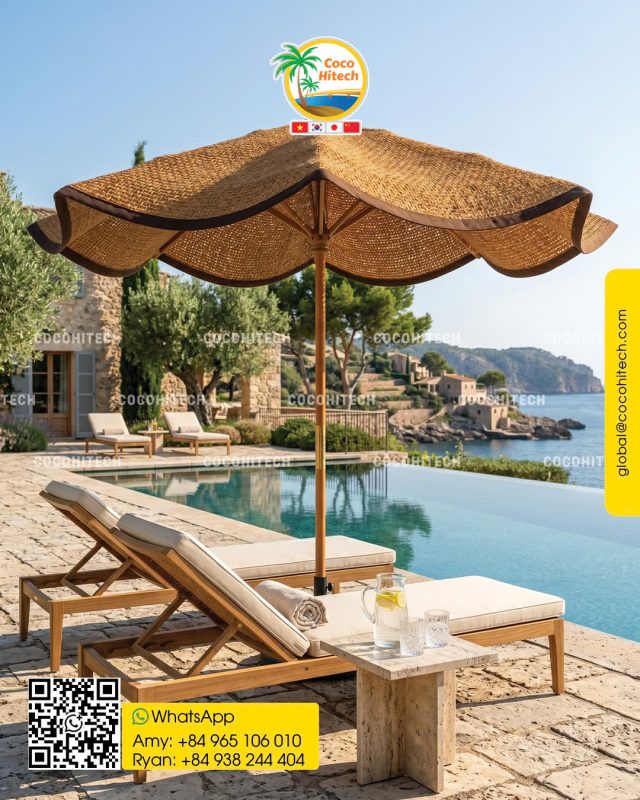
A polyester parasol usually provides a more uniform and dense area of shade. Depending on the thickness and coating of the fabric, it may block a significant amount of direct sunlight.
A coconut fiber parasol produces a different shading effect.
Its natural woven structure filters the sunlight instead of completely isolating the shaded area from the outdoor environment. Small amounts of light pass through the fibers, producing a softer, warmer, and more relaxing atmosphere.
This type of shade is especially suitable for spaces where the objective is not only to block the sun but also to maintain a visual connection with nature.
However, because the canopy is naturally open, it should not be considered a completely waterproof roof or a fully sealed UV barrier.
4. A More Open and Airy Feeling
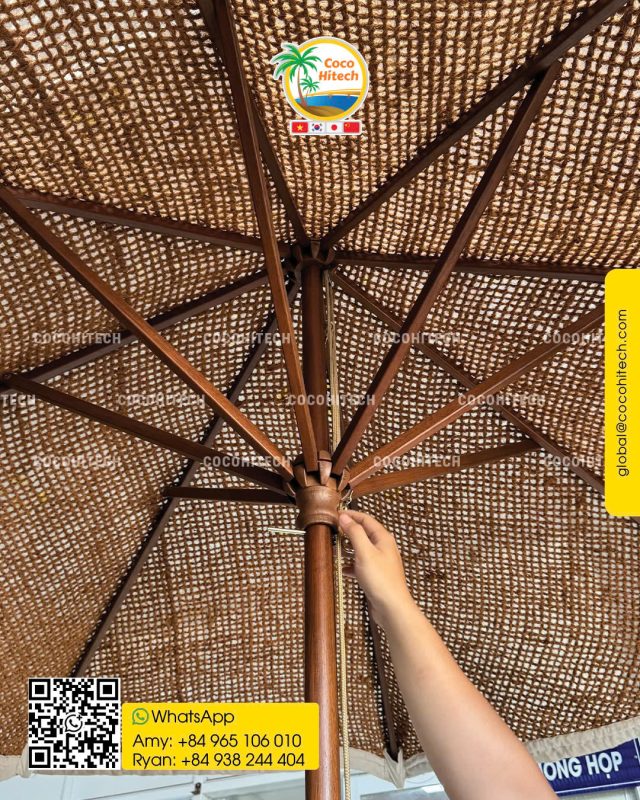
The spaces between the coconut fibers allow air to circulate through the canopy.
As a result, the shaded area feels more open and breathable, which is particularly beneficial in hot climates, on beaches, around swimming pools, or in tropical gardens.
A continuous polyester canopy may provide stronger protection from direct sunlight, but it can create a more enclosed feeling. During windy conditions, a tightly stretched synthetic canopy may also catch more wind.
The open texture of coconut fiber allows part of the airflow to pass through. Nevertheless, the overall wind resistance of any parasol still depends on:
- The size of the canopy
- The strength of the wooden frame
- The weight of the base
- The anchoring system
- The installation location
- Local weather conditions
No outdoor parasol should remain open during strong winds or severe weather.
5. Different Outdoor Design Styles
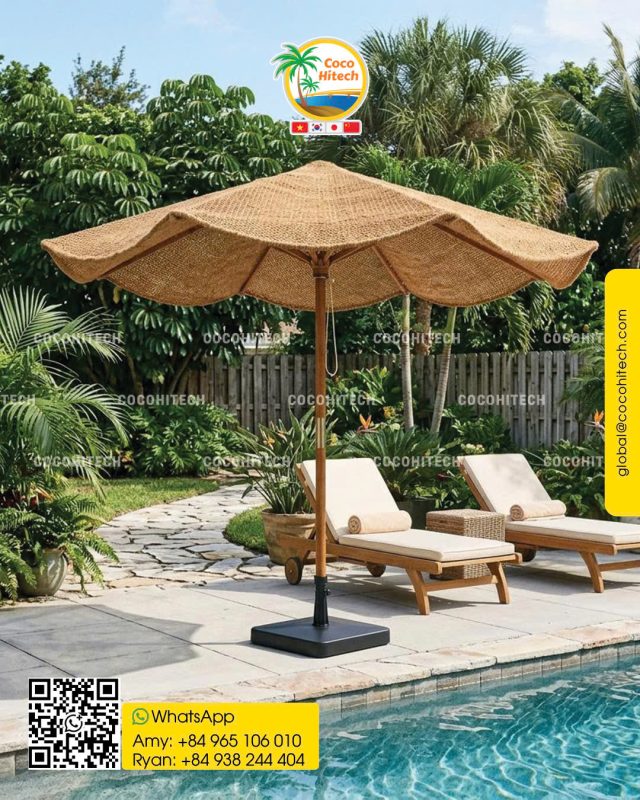
A polyester parasol can suit many commercial and residential styles because it is available in a wide variety of colors.
It is commonly used in:
- Urban terraces
- Modern restaurants
- Commercial spaces
- Promotional events
- Residential gardens
- Poolside seating areas
A coconut fiber parasol is more suitable for projects seeking a strong natural identity.
It works beautifully with:
- Wooden buildings and pergolas
- Natural stone terraces
- Tropical gardens
- Sandy beaches
- Resort swimming pools
- Rattan furniture
- Bamboo decorations
- Eco-friendly architecture
- Rustic restaurants and cafés
Its natural brown color pairs easily with beige, white, green, terracotta, light wood, stone, and other earthy materials.
The Unique Beauty of a Coconut Fiber Parasol
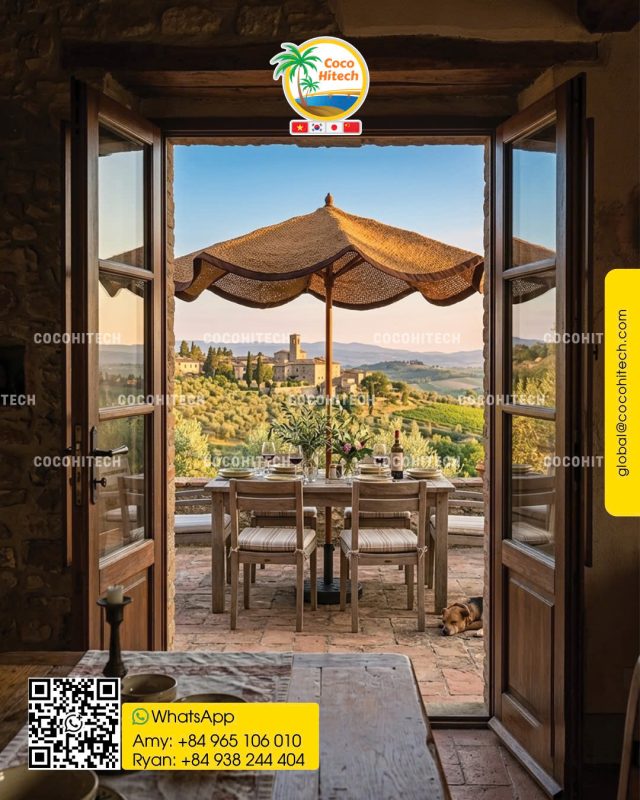
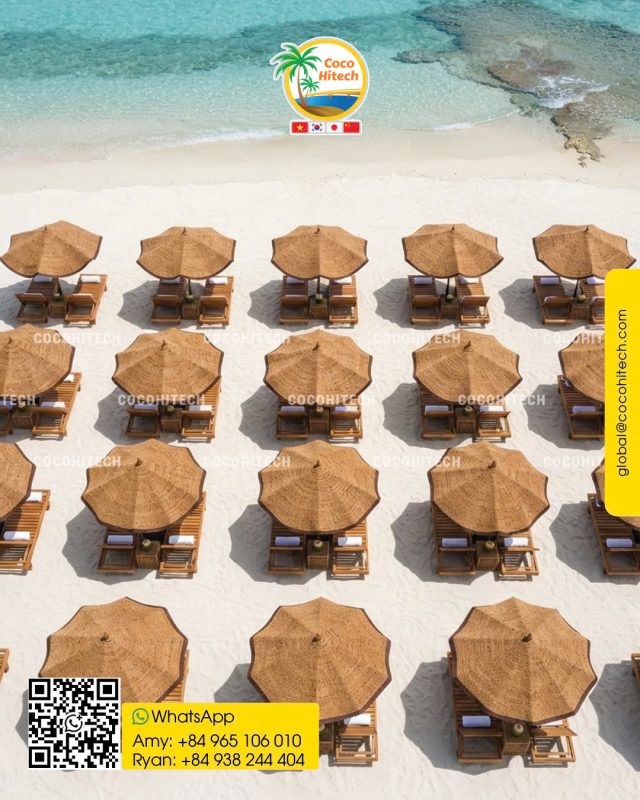
A Warm and Authentic Appearance
The natural brown color of coconut fiber immediately evokes the earth, tropical landscapes, beaches, and traditional craftsmanship.
Placed in a garden or beside a swimming pool, the canopy creates an elegant contrast with green plants, blue water, light-colored furniture, and pale stone surfaces.
The result is warm, relaxed, natural, and premium.
Unlike brightly colored synthetic parasols that can visually dominate a landscape, the coconut fiber parasol blends gently into its surroundings.
A Visible Handcrafted Texture
The surface of the parasol clearly reveals the coconut fibers used to create its canopy.
This visible texture adds depth and gives the impression of a carefully handcrafted product. It makes the parasol feel more expressive and individual than a smooth, fully uniform polyester covering.
Each coconut fiber canopy may feature slight natural differences. These subtle variations enhance its exclusive character and help create an atmosphere that feels authentic rather than mass-produced.
A Beautiful Interaction with Natural Light
One of the most attractive features of a coconut fiber parasol appears when sunlight passes through the canopy.
The fibers produce a natural pattern of light and shadow that changes throughout the day.
In the morning, the light is soft and golden. At midday, the shadows become more defined. During the late afternoon, the coconut fibers develop deeper and warmer tones.
This constantly changing interaction with sunlight gives the parasol a visual presence that conventional synthetic fabrics can rarely reproduce.
It also creates beautiful, photogenic spaces for hotels, restaurants, resorts, and social media content.
Natural Harmony with the Surrounding Landscape
A coconut fiber parasol does not overpower the landscape. It becomes part of it.
At a beach resort, it blends naturally with sand, wood, water, and tropical vegetation. In a garden café, it complements plants, stone pathways, rattan chairs, and wooden tables. Around a swimming pool, it creates a warm contrast with the blue water and modern architectural surfaces.
This makes it particularly valuable for architects, landscape designers, resort developers, and hospitality professionals who want every outdoor element to support a consistent design concept.
A Distinctive Focal Point
A conventional parasol is often treated as functional outdoor equipment. A coconut fiber parasol can become a signature feature of the property.
Its unusual canopy texture immediately attracts attention and encourages guests to stop, relax, take photographs, and enjoy the surrounding space.
For hotels, cafés, resorts, and restaurants, this visual distinction can contribute to a more memorable customer experience.
Which Parasol Should You Choose?
Choose a polyester parasol when:
- You need a specific color
- You want to print a logo on the canopy
- You require dense and uniform shade
- You prefer a modern or commercial appearance
- You need a standardized product that is easy to replace
- You require a fabric canopy with specific waterproof coatings
Choose a coconut fiber parasol when:
- You want to create a natural atmosphere
- You are designing a hotel, resort, eco-lodge, or beach club
- You need a distinctive decorative product
- You prefer plant-based materials
- You want soft, naturally ventilated shade
- You are developing a sustainable tourism project
- You want your outdoor area to stand out visually
- You need a product that harmonizes with wood, stone, bamboo, and vegetation
Coconut Fiber Parasols for Hotels and Resorts
In the hospitality industry, outdoor design can strongly influence the guest experience.
A swimming pool area equipped with standard polyester parasols may be functional, but it may not communicate a unique identity. Replacing standard fabric canopies with coconut fiber can create a more exclusive and recognizable atmosphere.
A coconut fiber parasol can help hotels and resorts:
- Strengthen their natural design concept
- Create highly photogenic relaxation areas
- Enhance the visual value of pools and beaches
- Build a distinctive resort identity
- Highlight the use of natural materials
- Offer guests a more memorable outdoor experience
- Support an eco-tourism or tropical design strategy
The parasol may also become an important visual element in promotional photographs, social media posts, travel brochures, and advertising campaigns.
Coconut Fiber Parasols for Restaurants and Cafés
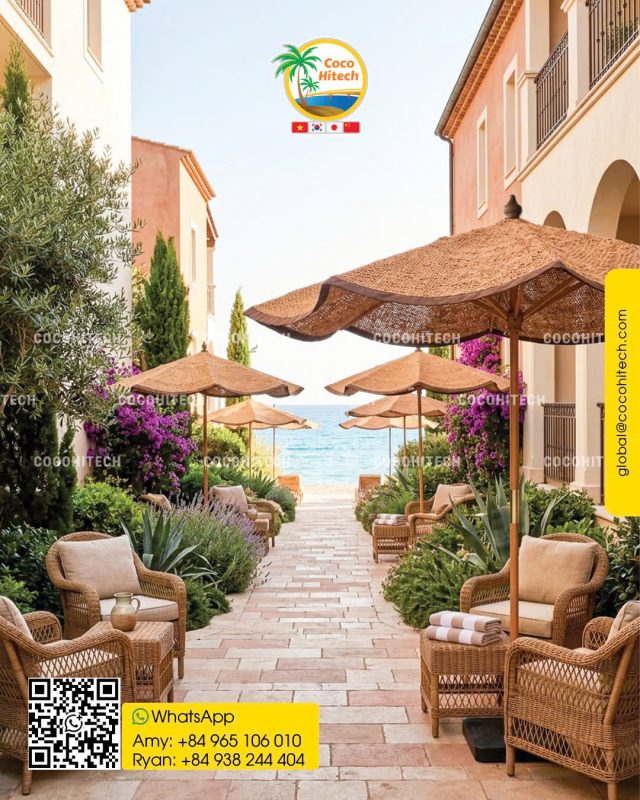
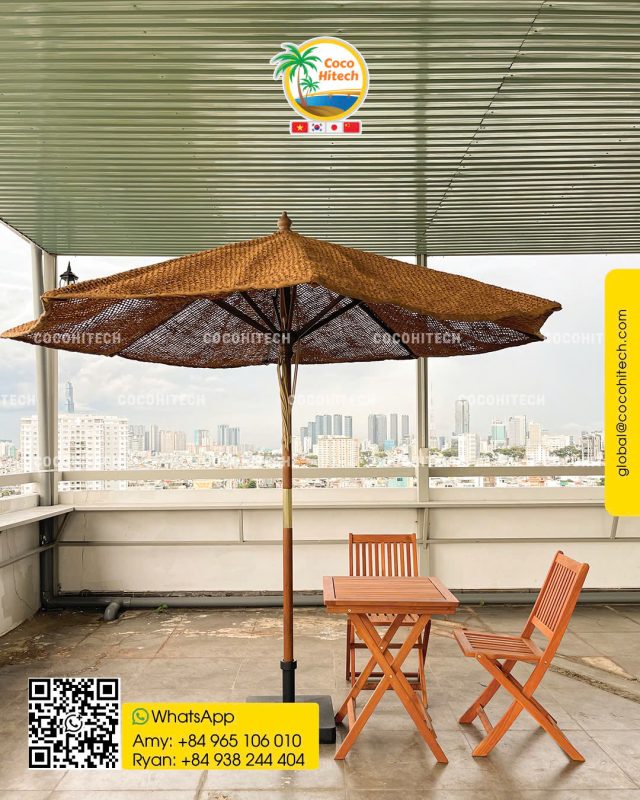
For restaurants and cafés, an outdoor terrace must be both functional and attractive.
A coconut fiber parasol naturally catches attention through its shape, texture, and warm color. It helps create an inviting space where customers feel connected to nature.
It can be combined with:
- Wooden tables
- Rattan chairs
- Tropical plants
- Bamboo lighting
- Natural stone walls
- Beige or white cushions
- Terracotta decorations
- Handcrafted outdoor furniture
This combination is especially suitable for beach restaurants, garden cafés, rooftop lounges, tropical bars, and bohemian-style dining spaces.
Coconut Fiber Parasols for Beaches and Pool Areas
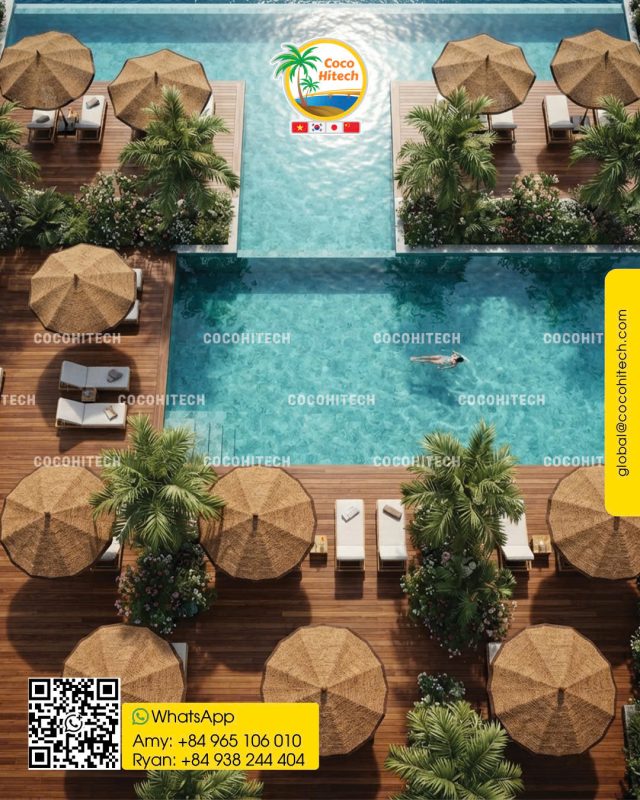
The earthy color of coconut fiber works particularly well beside sand and water.
On a beach, the parasol blends with the surrounding landscape instead of introducing an artificial or overly commercial appearance. Around a swimming pool, it creates a beautiful contrast between natural brown fibers and clear blue water.
Its ventilated structure also helps maintain a comfortable feeling beneath the canopy in warm outdoor environments.
The COCO HITECH Coconut Fiber Parasol
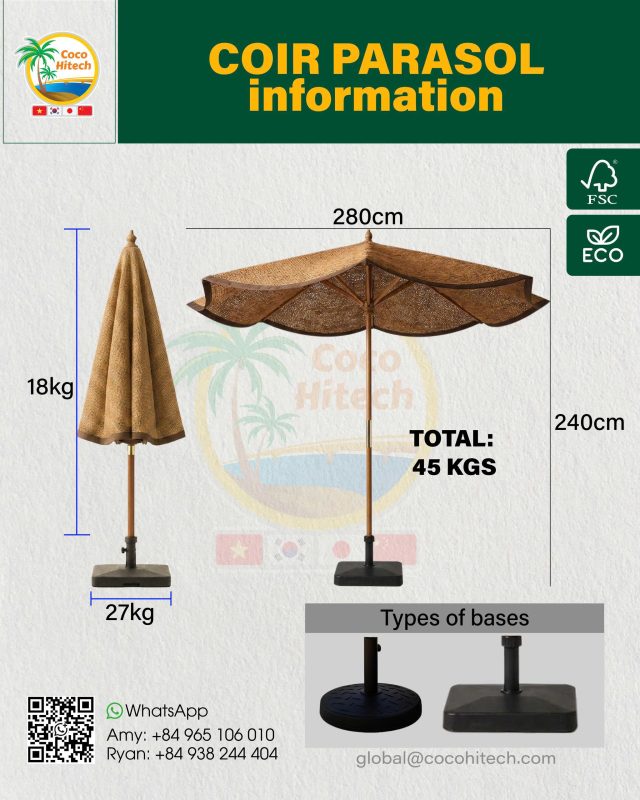
COCO HITECH is a Vietnamese manufacturer specializing in products made from natural coconut fibers.
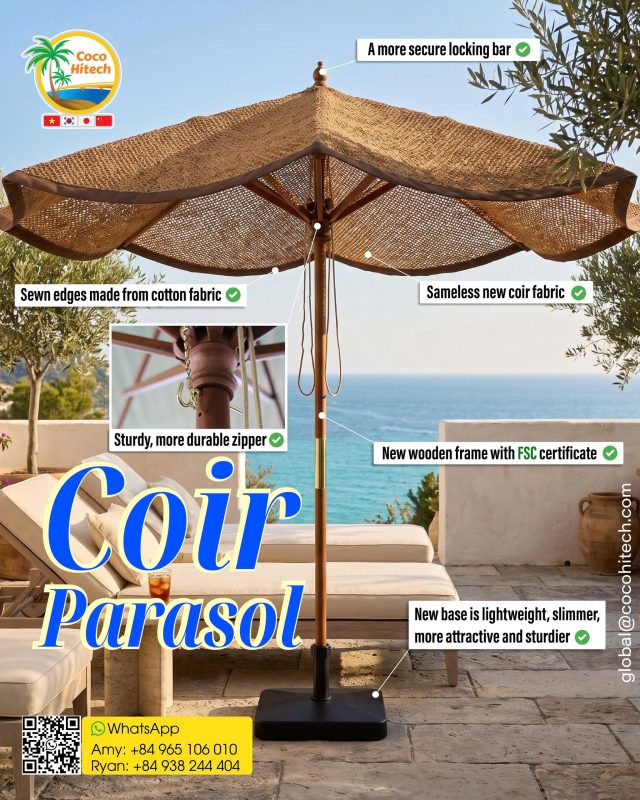
The COCO HITECH coconut fiber parasol combines a coconut coir canopy with a carefully designed natural wooden structure for outdoor landscaping and hospitality projects.
The main components include:
- Coconut fiber canopy
- Upper frame and supporting ribs
- Natural wooden pole
- Top connector or finial
- Wooden or compatible base
- Base tube
- Locking and fixing components
The wooden components can be produced using responsibly sourced materials, including FSC-certified wood according to project requirements and confirmed specifications.
Depending on the project, COCO HITECH can discuss canopy size, shape, fiber density, structure, and finishing details with professional buyers.
Care and Maintenance
Like any natural product used outdoors, a coconut fiber parasol requires appropriate care.
Recommended maintenance includes:
- Removing leaves, dust, and debris regularly
- Allowing the fiber to dry properly after heavy rain
- Avoiding prolonged exposure to standing moisture
- Checking the wooden structure and fixing points periodically
- Closing or dismantling the parasol during strong winds
- Storing it in a dry, ventilated area during long periods of non-use
- Replacing damaged components when necessary
Coconut fiber naturally changes over time. Its color may gradually become softer due to sunlight and outdoor exposure. This natural aging process contributes to its rustic and authentic appearance.
Is a Coconut Fiber Parasol Waterproof?
A coconut fiber canopy is not designed to function as a completely waterproof roof.
Its main purposes are to filter sunlight, provide soft natural shade, encourage airflow, and enhance the visual quality of an outdoor space.
Because there are openings between the fibers, rainwater can pass through the canopy.
Projects that require complete rain protection should consider an additional waterproof layer or a specially engineered combined canopy system.
Can a Coconut Fiber Parasol Be Used in Windy Areas?
The open fiber structure allows some air to pass through the canopy, which may reduce the sail effect compared with certain fully closed fabric canopies.
However, this does not mean the parasol can safely remain open during strong winds.
Safety depends on the base weight, frame construction, anchoring system, canopy dimensions, installation location, and actual wind speed.
For professional projects, the parasol should be installed according to site conditions and closed during unsuitable weather.
Environmental Considerations
Coconut coir is obtained from coconut husks, a natural by-product of coconut processing.
Using this fiber helps create additional value from agricultural materials that might otherwise be underused. The natural fiber canopy can also decompose more easily at the end of its life than conventional synthetic polyester fabric.
However, the environmental performance of the complete parasol also depends on:
- The origin of the wood
- The manufacturing process
- Transportation distance
- Surface treatments
- Metal or plastic accessories
- Product lifespan
- Maintenance and disposal methods
For this reason, a coconut fiber parasol should be evaluated as a complete product rather than only by the canopy material.
Conclusion
A traditional polyester parasol remains a practical choice for projects requiring specific colors, printed branding, dense shade, or standardized replacement options.
However, a coconut fiber parasol offers a completely different aesthetic experience.
Its natural texture, warm color, filtered shade, open structure, and harmonious relationship with the landscape make it much more than a simple outdoor umbrella. It becomes an architectural and decorative feature capable of giving an outdoor space a memorable identity.
For hotels, resorts, restaurants, cafés, beach clubs, gardens, and premium landscaping projects, the COCO HITECH coconut fiber parasol provides a natural, distinctive, and elegant shade solution.
COCO HITECH – Natural Coconut Fiber Solutions for Beautiful Outdoor Spaces.
COCO HITECH Co., Ltd. is one of Vietnam’s leading manufacturers and exporters of coir products.
- High-density coir mats for durability
- Stable supply with large production capacity
- Competitive pricing for global markets
- Professional export service (Korea, Europe, and more)
OUR INTERNATIONAL TEAM SALE
- 대표: Mr.Ryan (Vietnam): +84 938244404(Kakaotalk, Wechat, Whatsapp)
- Amy (English) : +84 965106010 (WhatsApp, Kakao, Line)
- Ryna ( 한국 영업 담당자 ): +84 0364775030
- Vi (中文)+84397317401| 微信ID: Nttv0608
- Website: https://cocohitech.com
- Website: https://kr.cocohitech.com(Korea)
- Website: https://cocohitech.jp/ (Japan)
- Youtube: https://www.youtube.com/watch?v=X7uwnNDKJ4M&t=70s
- Instagram: https://www.instagram.com/cocohitech/
COCO HITECH JSC
261-263 Phan Xich Long Street, Ward 2, Phu Nhuan District, Ho Chi Minh City, Vietnam Tel: +8493 8244404 (Vietnam) Email: info@cocohitech.com https://cocohitech.com | https://coconutpowder.net